
CAT rewards students who prepare with clarity and consistency, not just those who study the longest. Our Dombivli centre is built around that reality: a strict 40-minutes-per-section rhythm, honest mock analysis, and a faculty team focused on VARC, DILR and QA the way CAT actually tests them — not generic aptitude training.
Every student starts with a diagnostic test to get an honest baseline across all three sections before any structured teaching begins. That result shapes an individual starting point — concept-building for the weak areas, guided practice as fundamentals strengthen, and a personalised pace instead of one fixed track for the whole batch.
As preparation progresses, classroom teaching is paired with sectional tests, full-length mock CATs under real timed conditions, and detailed performance analysis after every mock — because taking a mock test is only half the exercise; reviewing it closely is where the real improvement happens.

Years of CAT-Focused Teaching
Full-Length Mock CATs per Batch
Faculty Across VARC, DILR & QA
MBA Aspirants Guided Since Inception
Dombivli has no shortage of coaching options, so we've stayed deliberately focused on the handful of things that actually move a candidate's percentile, rather than adding features for the sake of a longer brochure.
Every teacher on our team has spent years specifically inside the CAT pattern — a working understanding of how VARC, DILR and QA are actually tested within a strict 40-minute sectional window, not generic aptitude teaching.
CAT punishes shortcut-only preparation the moment a question deviates slightly from the pattern. We build genuine conceptual clarity first, then layer speed and elimination technique on top of it.
Our mocks are timed and formatted exactly like the actual CAT — same 120-minute structure, same strict 40-minutes-per-section limit, same TITA and negative-marking rules. No moving between sections, just like the real exam.
A first-time aspirant and a repeat test-taker chasing a specific percentile need very different support. We build individual pace and sectional-focus plans instead of forcing everyone through one fixed track.

Preparation is sequenced, not scattered — Learn, Practise, Test, Analyse, Improve — so students always know exactly where they are in the journey.
A baseline test across VARC, DILR and QA to map current strengths and gaps before classes begin.
Structured, section-wise sessions across Verbal Ability, Data Interpretation & Logical Reasoning, and Quant.
Timed sectional tests and full-length mock CATs under strict, real exam conditions.
Detailed mock analysis, revision cycles, and question-selection strategy for exam-day readiness.
A strong CAT percentile makes a candidate eligible for shortlisting — it does not by itself guarantee admission. After the exam, each institute applies its own shortlisting criteria using the percentile alongside academic profile, work experience, and category, before moving candidates into further rounds such as the Written Ability Test (WAT), Group Discussion (GD) or Personal Interview (PI).
Because the exam itself is only the first filter, our coaching doesn't stop at concept teaching. Sectional sessions build VARC, DILR and QA speed and accuracy separately; mock-test phases replicate the strict, non-navigable 40-minute-per-section format; and as CAT approaches, focus shifts to question-selection strategy and exam-day time management, since the final call also depends heavily on what happens after the percentile is out.
Finance · Marketing · Human Resources · Operations · General Management
Business Analytics, Consulting, Strategy, Product Management
Sales, Banking & Financial Services, Entrepreneurship — outcomes vary by institute, specialisation and individual profile
A Bachelor's degree (minimum three years) from a recognised university is the baseline academic requirement, with minimum aggregate marks that vary by category. There is no upper age limit and no cap on the number of attempts. Candidates should always verify current-year details on the official CAT information bulletin at iimcat.ac.in.
General, EWS and NC-OBC candidates need at least 50% aggregate marks (or equivalent CGPA); SC, ST and PwBD candidates need at least 45%. Professional-degree holders (CA, CS, ICWA/CMA, FIAI) are also eligible, subject to applicable minimum marks.
Candidates in their final year, or awaiting results, can also apply — if shortlisted, they must submit a certificate confirming degree completion within the admitting institute's timeline.
No upper age limit and no restriction on number of attempts. Reserved-category candidates must upload valid category certificates at registration, as per Government of India norms.
The IIMs don't release an official, fixed CAT syllabus — the topics below reflect the consistent pattern of questions asked over recent years, across three sections.
Tests reading speed, comprehension, inference and command over English usage. Reading Comprehension typically forms the larger share of this section.
Combines analytical reasoning with reading and interpreting data across connected sets of questions.
Tests mathematical concepts largely at the Class 10–12 level, with emphasis on application and speed over advanced theory.
| Section | Approx. Questions | Time Allotted |
|---|---|---|
| Verbal Ability & Reading Comprehension (VARC) | 24 | 40 minutes |
| Data Interpretation & Logical Reasoning (DILR) | 22 | 40 minutes |
| Quantitative Ability (QA) | 22 | 40 minutes |
| Feature | Details |
|---|---|
| Correct Answer | +3 marks |
| Incorrect MCQ Answer | -1 mark (negative marking) |
| Incorrect / Unattempted TITA | No negative marking |
| Total Marks (indicative) | 204 |
| Total Duration | 120 minutes |
Guidance Institute for Competitive Exams was founded in 2018 with a vision to provide effective and qualitative education for competitive examinations. Our strength lies in our dedicated and experienced faculty. GICE Academy has emerged as a leading competitive exam institute in Thane with a strong focus on student success.
Career With Us





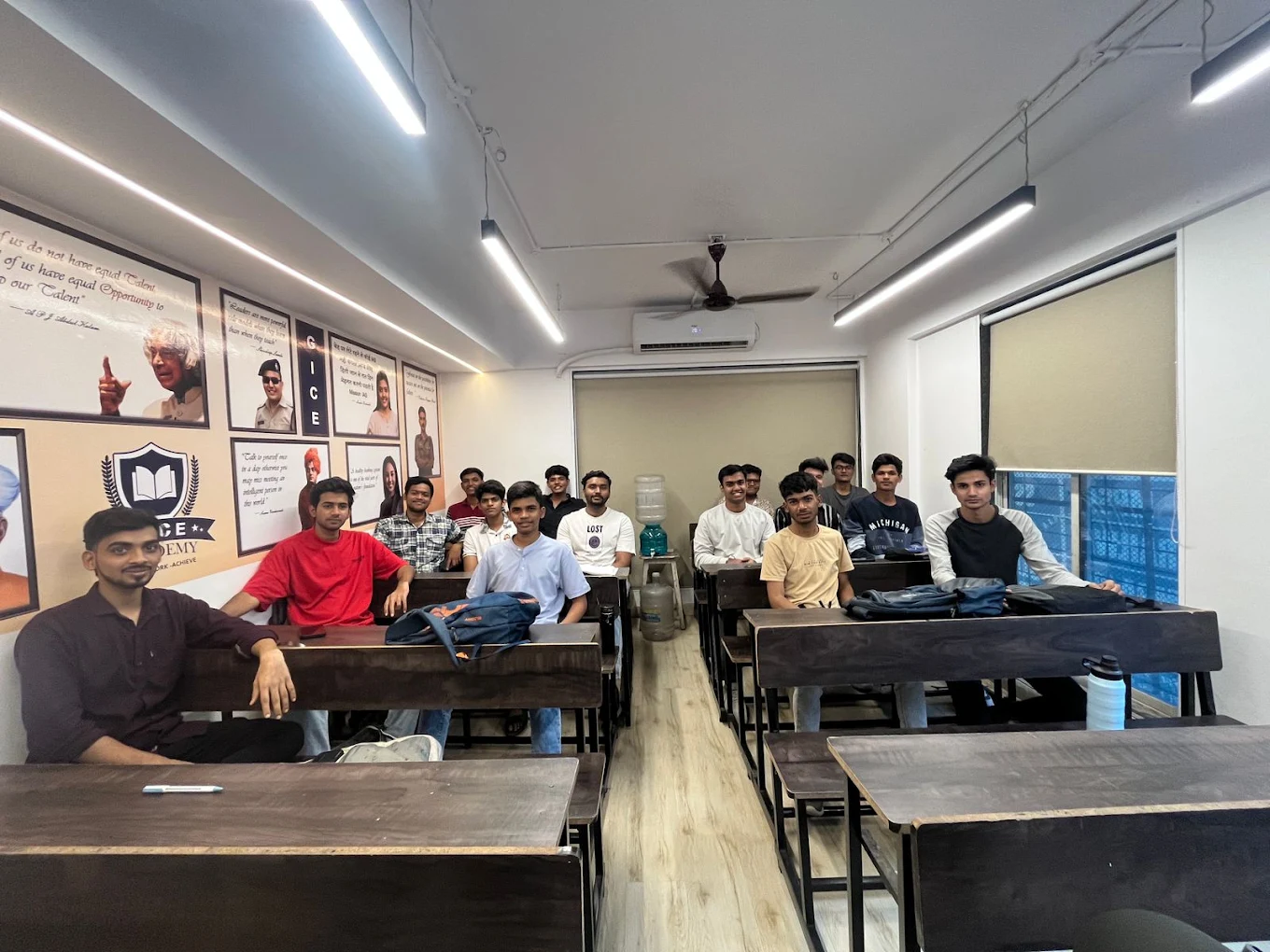
Explore the learning environment and classroom sessions at GICE Academy.
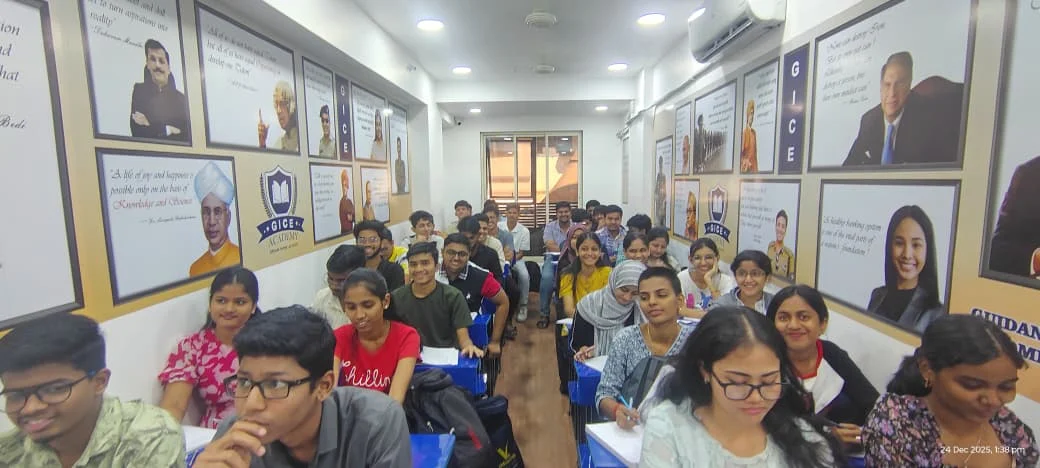
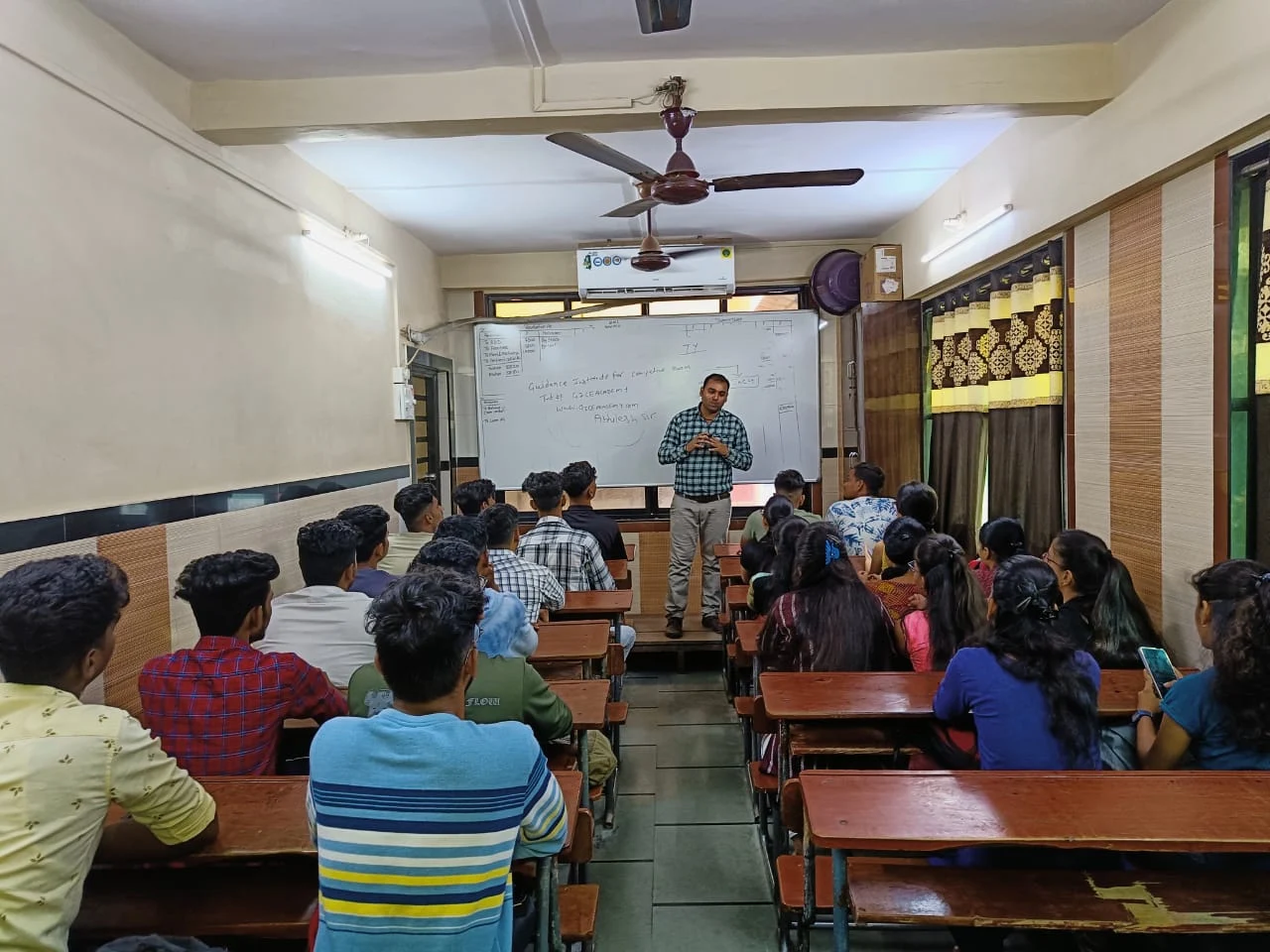
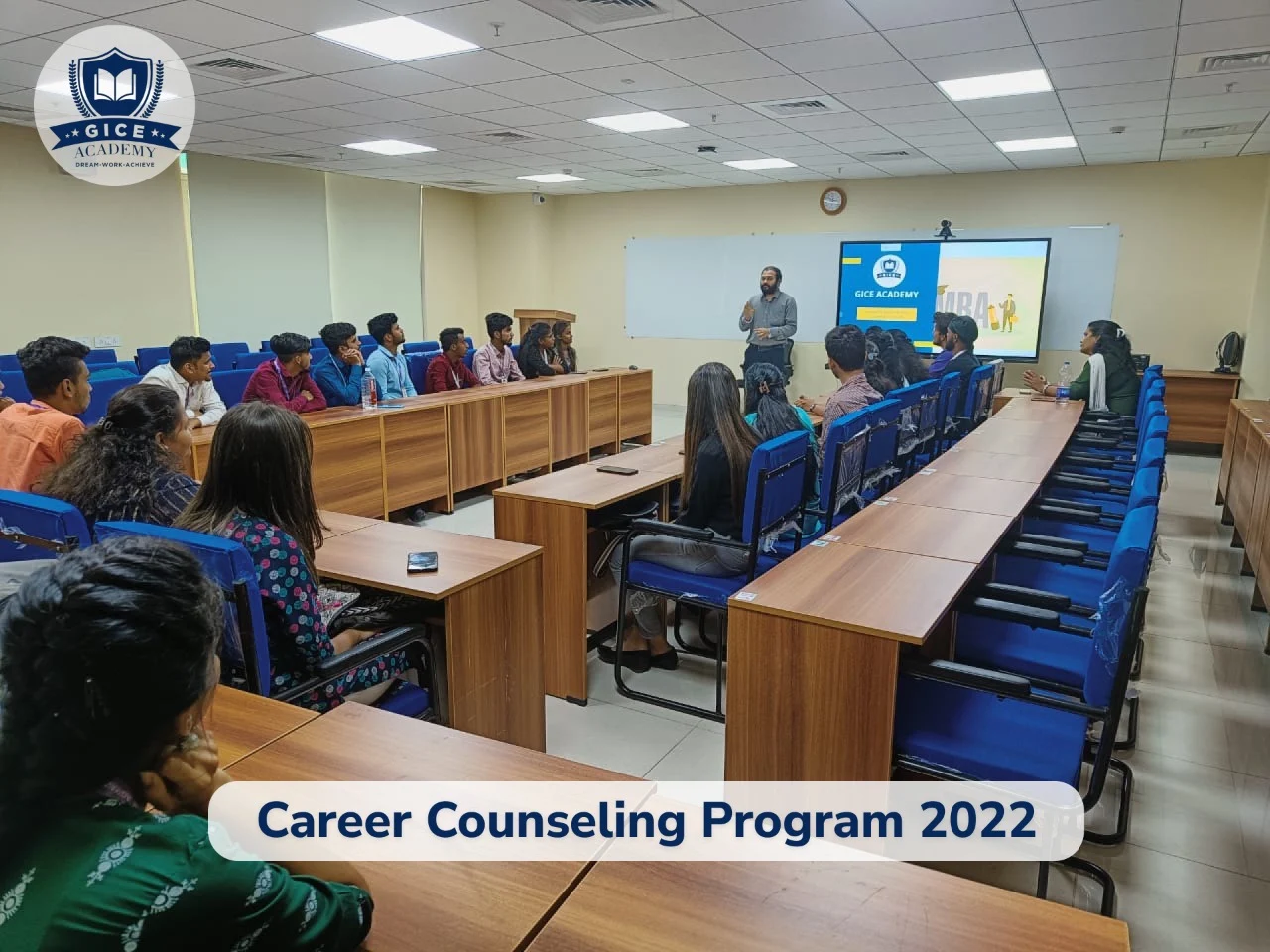
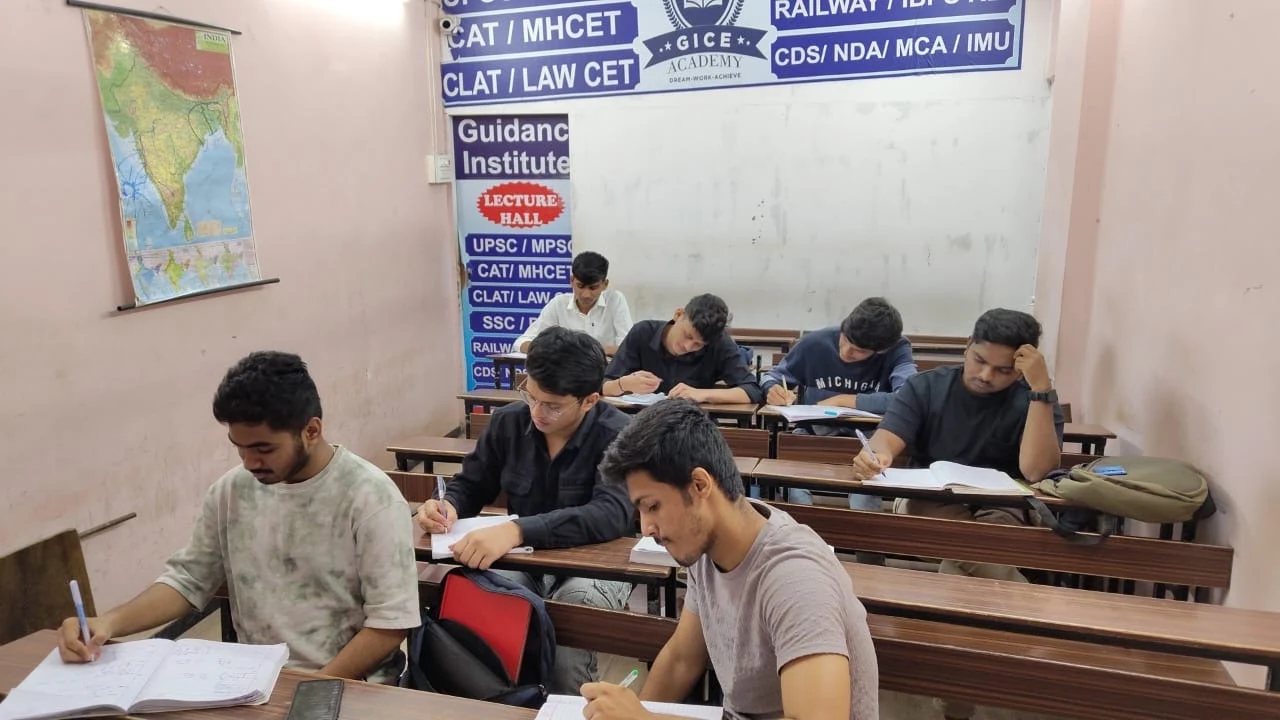
Experienced faculty across VARC, DILR and QA, a syllabus broken into a staged study plan, and mock-test practice built strictly around CAT's real 40-minute sectional format.
Yes — online batches run alongside our in-person Dombivli sessions, with the same study material, mock-test access, and faculty availability for doubts.
Yes. We run dedicated weekend and evening batches specifically for candidates balancing a full-time job with CAT preparation, without compressing the syllabus.
Full-length mock CATs run at regular intervals through the programme, timed and formatted to match the actual exam's sectional structure, with detailed post-mock analysis.
Yes — our programme includes a focused track for candidates who have attempted CAT before and want a more targeted, sectional-strategy-driven round of preparation rather than starting over.
Yes — DILR gets dedicated set-by-set practice across arrangements, puzzles, data caselets and reasoning sets, building genuine comfort rather than a handful of memorised tricks.
[Your full address here — building, street, landmark, area, Dombivli, pincode]