
The CDS Entrance Exam, conducted twice a year by UPSC, is one of India's leading routes for graduates who want to become commissioned officers in the Armed Forces — opening the door to four training academies: the Indian Military Academy, the Indian Naval Academy, the Air Force Academy and the Officers' Training Academy. Our Thane centre exists to help graduates in the area prepare for both halves of that journey: the written examination, and the SSB interview that follows it.
Every candidate who joins begins with a diagnostic assessment across English, General Knowledge and, where the target academy requires it, Elementary Mathematics. That baseline shapes a personalised study plan built around one philosophy: Learn → Practise → Test → Analyse → Improve → Revise.
Because qualifying the written paper only makes a candidate eligible for the SSB stage — not a guarantee of selection — preparation at GICE Academy also builds early awareness of officer-like qualities, communication and teamwork, alongside regular subject-wise practice, previous-year questions and full-length timed mock tests.

Academies CDS Leads To — IMA, INA, AFA, OTA
CDS Exam Conducted Every Year by UPSC
Written Papers for IMA / INA / AFA Aspirants
Stages From Application to Training
Thane has no shortage of coaching options, so we've stayed deliberately focused on the things that genuinely move a candidate through both the written exam and the SSB — not just exam-day marks.
IMA, INA, AFA and OTA each carry different eligibility, subject requirements and written-paper structure. We help candidates identify their target academy early and build a study plan around its specific demands.
Daily reading and grammar practice, a continuous current-affairs habit, and structured Elementary Mathematics practice for IMA/INA/AFA aspirants — not last-minute cramming.
Timed, objective mock tests built around real question-selection pressure, so candidates learn when to attempt a question and when to leave it, not just how to answer it.
Because the written exam only qualifies a candidate for the SSB stage, we build awareness of officer-like qualities — communication, teamwork, decision-making — alongside academic preparation, not after the result.
The CDS Entrance Exam leads to four distinct training academies, each tied to a specific service, eligibility profile and written-paper structure. Candidates should confirm exact, current requirements — including gender eligibility, which has been periodically revised — from the latest official UPSC notification.
Permanent commission in the Army. Generally open to graduates in any discipline. Written exam: English, GK & Elementary Mathematics.
Permanent commission in the Navy. Generally requires an Engineering degree, given the technical nature of naval roles.
Permanent commission in the Air Force. Generally requires Physics & Maths at Class 12, or an Engineering degree.
Short Service Commission. Open to graduates from any discipline — no Elementary Mathematics paper in the written exam.
Gender eligibility, along with all other academy-specific criteria, should always be verified against the latest official UPSC CDS notification before applying.
CDS eligibility differs across IMA, INA, AFA and OTA rather than following one single, universal standard — candidates should identify their target academy first, then verify the exact conditions for that academy.
A degree in any discipline for IMA and OTA; a degree in Engineering for INA; a degree with Physics & Mathematics at Class 12, or an Engineering degree, for AFA. Final-year students can generally apply provisionally.
Fixed separately for every cycle through a precise date-of-birth window. Recent cycles have used approximate ranges around 19–24 years for IMA/INA, a similar band for AFA, and a slightly wider range for OTA.
Generally Indian citizens (with specific provisions for Nepal, Bhutan and certain other categories). OTA is generally open to both men and women; IMA, INA and AFA have generally been open to male candidates, subject to the current notification. IMA/INA/AFA candidates are generally required to be unmarried.
Eligibility conditions genuinely differ by academy and are published afresh with every UPSC notification. Always verify current details from the official notification before applying.
The written examination structure differs between OTA and the other three academies. IMA, INA and AFA candidates attempt three papers — English, General Knowledge and Elementary Mathematics. OTA candidates attempt only English and General Knowledge, without Mathematics.
Grammar and correct usage, vocabulary, sentence structure and improvement, reading comprehension, synonyms and antonyms, error identification, and ordering of words and sentences.
Current events, History of India, Geography, General Science, Indian polity, economy and general awareness, and defence-related awareness — best built as a continuous, cumulative daily habit.
The figures below reflect the general pattern seen in recent examination cycles and should be verified against the current UPSC notification before being relied upon.
| Paper | Subject | Approx. Max Marks | Approx. Duration |
|---|---|---|---|
| Paper I | English | 100 | 2 hours |
| Paper II | General Knowledge | 100 | 2 hours |
| Paper III | Elementary Mathematics | 100 | 2 hours |
| Paper | Subject | Approx. Max Marks | Approx. Duration |
|---|---|---|---|
| Paper I | English | 100 | 2 hours |
| Paper II | General Knowledge | 100 | 2 hours |
UPSC confirms the exact marks, duration and any structural change for each cycle in its official notification. Treat the figures above as a preparation guide and verify current-year figures officially before finalising your strategy.
Written exam qualification, SSB recommendation, medical fitness, final merit and admission to training are distinct milestones — clearing one does not automatically guarantee the next.
English, GK & Maths (where applicable)
Multi-day officer-quality assessment
Fitness & medical standards check
Combined written + SSB marks
IMA, INA, AFA or OTA by merit
Leading toward commissioning
Preparation follows one consistent philosophy: Learn → Practise → Test → Analyse → Improve → Perform.
Understanding current level and identifying the target academy — IMA, INA, AFA or OTA.
English, General Knowledge and Mathematics (where applicable), built topic by topic.
Previous-year questions, sectional tests and full-length CDS mocks under timed conditions.
Detailed performance review, revision, and early guidance on the SSB process ahead.
CDS is a pathway toward officer-level training, not an automatic guarantee of a commission — selected candidates proceed through academy training before progressing toward a commissioned officer role, subject to completing training and meeting all applicable service requirements.
Permanent commission (IMA) or Short Service Commission (OTA), with responsibilities centred on leadership, command and personnel management.
Commissioned officer roles combining specialised technical training with leadership responsibilities aboard naval assets.
Flying and non-flying branches depending on training performance and medical fitness — not every candidate becomes a pilot.
NDA is a Class-12-level entry route; CDS is graduate-level across all three services; AFCAT is Air-Force-specific and run by the IAF, not UPSC.
GICE Academy does not guarantee selection, SSB recommendation, rank, commission or any specific outcome. Preparation quality and consistency contribute to results, but outcomes depend on each candidate's performance across all official stages.
Guidance Institute for Competitive Exams was founded in 2018 with a vision to provide effective and qualitative education for competitive examinations. Our strength lies in our dedicated and experienced faculty. GICE Academy has emerged as a leading competitive exam institute in Thane with a strong focus on student success.
Career With Us




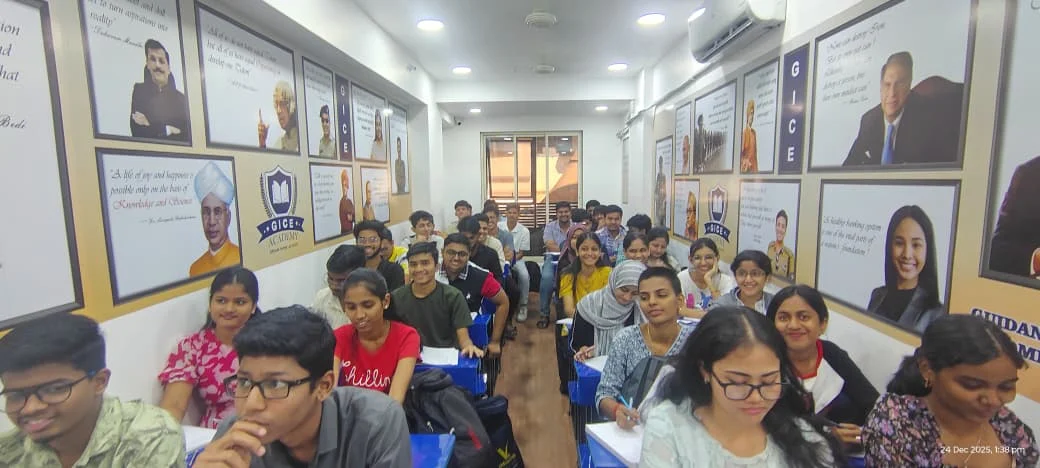
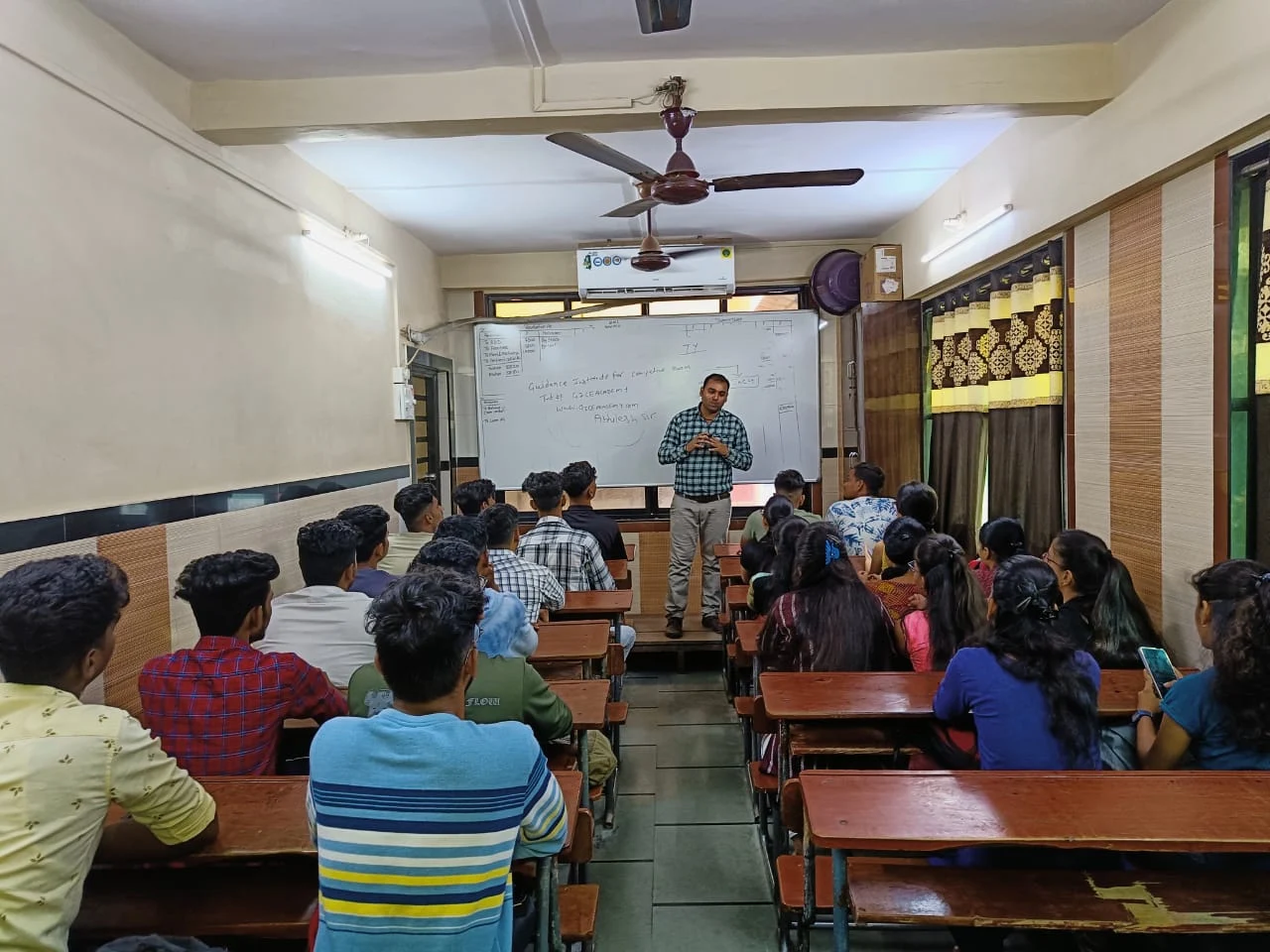
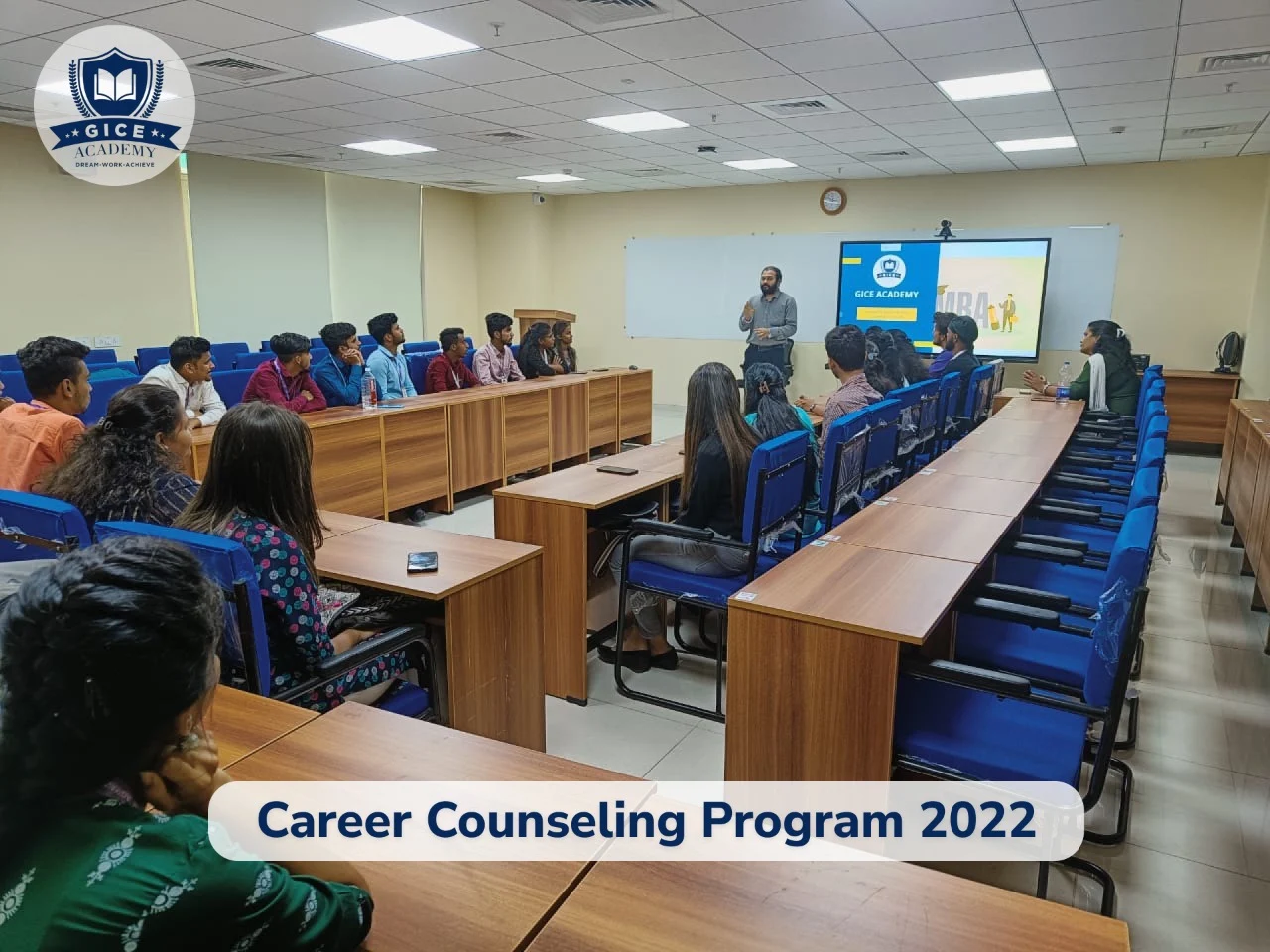
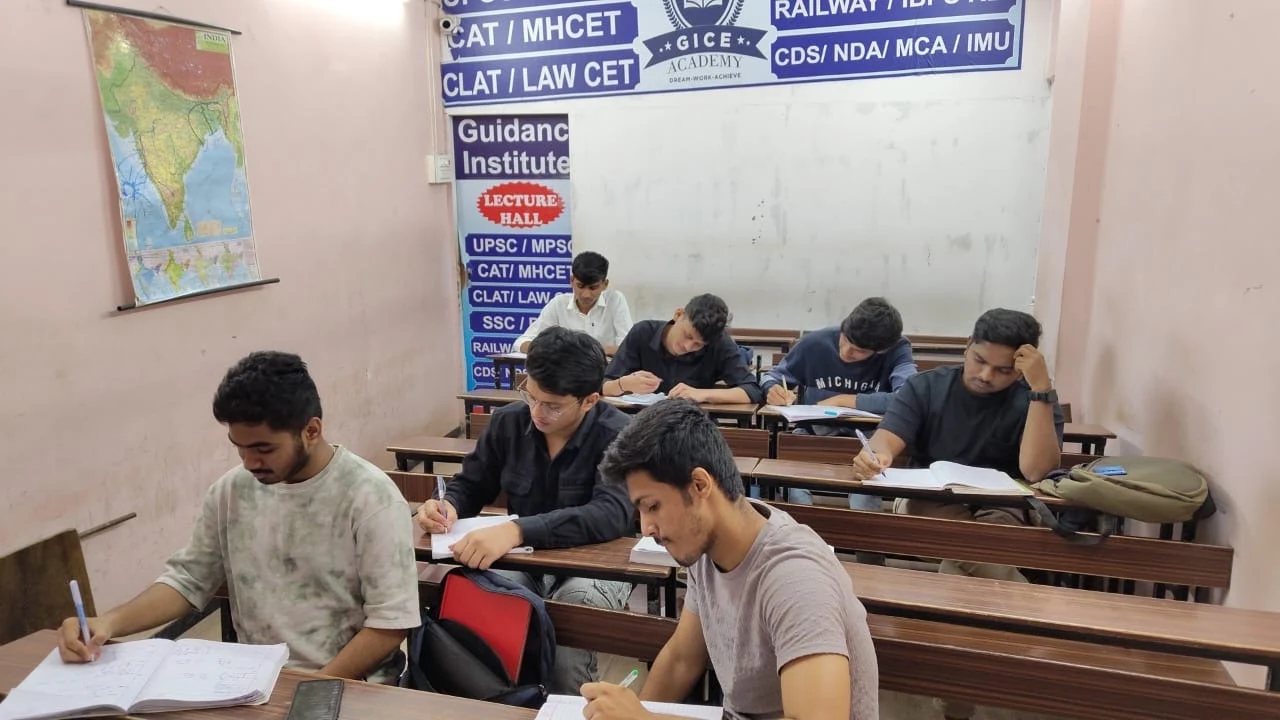
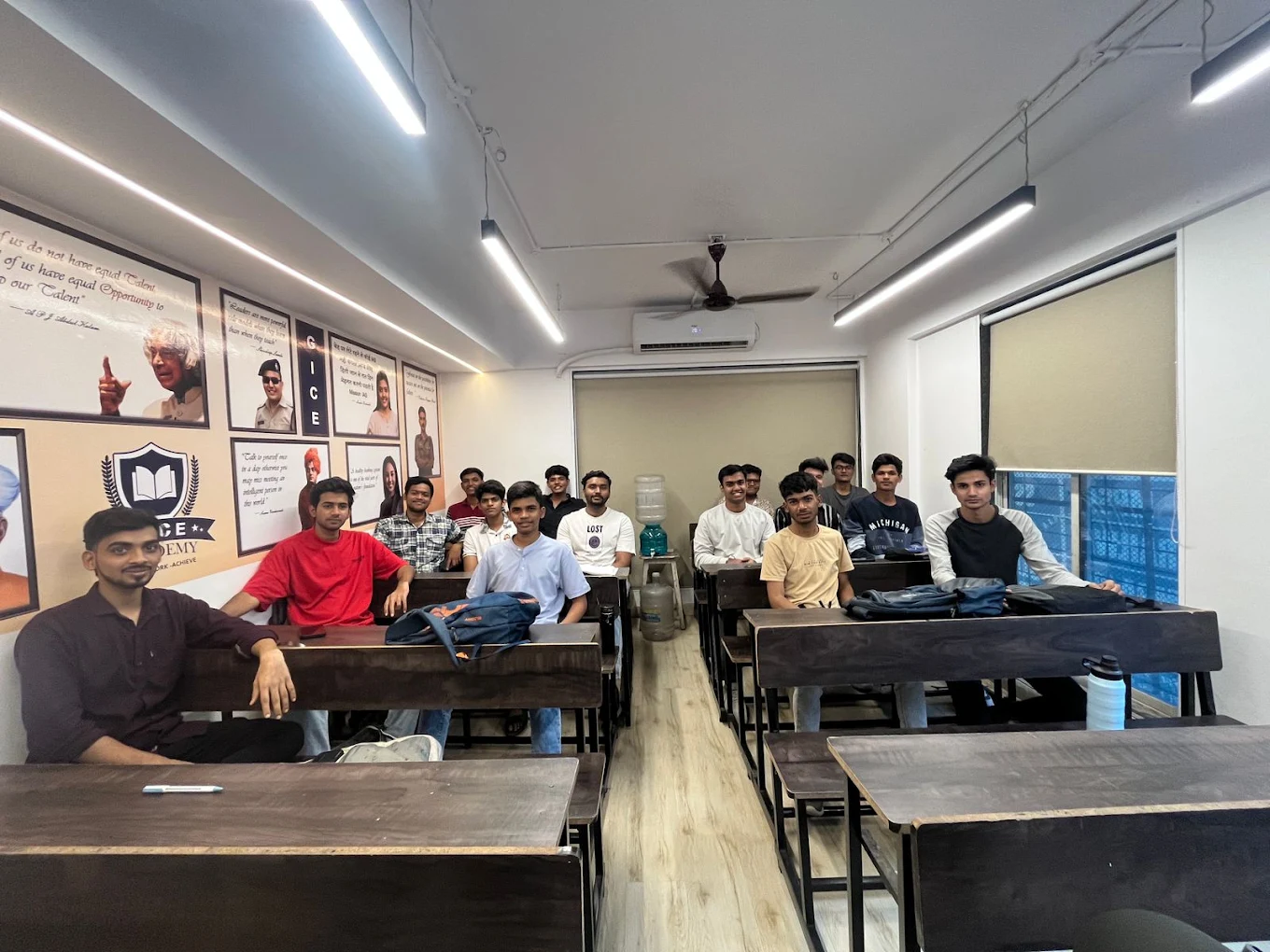
Explore the learning environment and classroom sessions at GICE Academy.
The Combined Defence Services Examination, conducted by UPSC to select graduate candidates for officer training at IMA, INA, AFA and OTA.
For IMA, INA and AFA: English, General Knowledge and Elementary Mathematics. For OTA: English and General Knowledge only.
No — OTA candidates attempt only English and General Knowledge, without an Elementary Mathematics paper.
Yes, all papers are objective-type and subject to negative marking. The exact penalty should be verified from the current official notification.
Candidates who clear the qualifying cut-off are called for the SSB interview, followed by a medical examination and final merit before academy allocation.
Yes — early SSB awareness covering officer-like qualities, communication and teamwork is built into the preparation journey alongside academic coaching for the written exam.
[Your full address here — building, street, landmark, area, Thane, pincode]