
CMAT (Common Management Admission Test) is a national-level, computer-based entrance examination conducted by the National Testing Agency (NTA) for admission to MBA and PGDM programmes. CMAT scores are accepted by AICTE-approved institutions, university departments, constituent colleges, and affiliated colleges across India.
CMAT evaluates quantitative ability, logical reasoning, language comprehension, general awareness, and business and entrepreneurship concepts, all within a strict three-hour window. Success depends less on last-minute cramming and more on structured, sustained preparation.
Our Dombivli centre supports CMAT aspirants through concept building, guided practice, CMAT-style mock tests, detailed performance analysis, and personalised faculty mentorship, following a simple philosophy: Learn → Practise → Test → Analyse → Improve → Repeat.

Sections, 20 Questions Each
Minutes Total Exam Duration
Total Marks Across 100 Questions
National Testing Agency Conducts CMAT
CMAT packs five sections into a strict 180-minute, single-window format. Our Dombivli programme is built around the things that genuinely convert practice into a stronger score.
Quantitative Techniques & DI, Logical Reasoning, Language Comprehension, General Awareness, and Innovation & Entrepreneurship are each built up from fundamentals before timed practice begins.
This newer section is often under-prepared by students. We build basic business and startup awareness into the regular teaching cycle, not left as an afterthought.
Since CMAT has no individually timed sections within the 180-minute window, we help students build a personal time-allocation strategy across all five sections.
With +4 for correct and -1 for incorrect answers, we train disciplined question selection so students know when to attempt, skip, and return to a question.
CMAT-2026 is organised into five sections of 20 questions each, all within a single, un-sectioned 180-minute window.
Arithmetic, algebra, geometry and data interpretation-based reasoning.
Puzzles, arrangements, coding-decoding and analytical reasoning.
Reading comprehension, vocabulary and grammar.
Current affairs, static GK, and awareness of business, innovation and entrepreneurship concepts.
NTA reserves the right to revise the scheme of examination for future cycles. Always cross-check the latest exam pattern on the official CMAT website (cmat.nta.nic.in) before finalising your preparation.
Based on the official CMAT Information Bulletin published by NTA, eligibility to appear for CMAT is kept broad.
Candidates must hold a Bachelor's Degree in any discipline from a recognised university.
Candidates in their final year of a Bachelor's Degree are also eligible to apply, provided their result is declared before the commencement of admission for the relevant academic session.
The candidate must be a citizen of India. There is no upper age restriction for appearing in CMAT.
Meeting CMAT's basic eligibility allows you to sit for the exam, but each institute sets its own additional requirements for admission — minimum graduation marks, subject background, or work-experience preferences.
Always verify the specific admission eligibility criteria of your target institutes directly on their official websites, since these can vary from what is required merely to sit for CMAT.
The CMAT syllabus spans five sections. Here is a section-wise breakdown of the topics most relevant to preparation.
Number system, arithmetic, percentages, profit and loss, ratio and proportion, averages, time and work, time-speed-distance, algebra, geometry, mensuration, probability, permutation-combination, and data interpretation from tables, charts and graphs.
Coding-decoding, number and letter series, blood relations, direction sense, seating arrangements and puzzles, syllogisms, analogy and classification, and analytical/data-based reasoning.
As per the official CMAT-2026 scheme of examination published by NTA, the figures below should be verified against the official CMAT website before being relied upon.
| Section | Questions | What It Tests |
|---|---|---|
| Quantitative Techniques & DI | 20 | Quantitative aptitude, data-based reasoning |
| Logical Reasoning | 20 | Logical & analytical thinking |
| Language Comprehension | 20 | Reading and language skills |
| General Awareness | 20 | Current affairs, static GK |
| Innovation & Entrepreneurship | 20 | Business, innovation, entrepreneurship |
| Total | 100 | 400 marks | 180 minutes |
NTA reserves the right to revise the scheme of examination for future cycles. Always cross-check the latest exam pattern on cmat.nta.nic.in before finalising your preparation.
While each institute follows its own process, the general journey from CMAT registration to MBA/PGDM admission typically follows these broad steps.
Register via the official NTA website
On your allotted date, city & shift
Normalised across shifts by NTA
GD / PI / written assessment, per institute
Decided by the individual institute
Preparation follows a consistent framework — Assess, Plan, Learn, Practise, Test, Analyse, Improve, Perform — with real feedback built into every stage.
Understanding your current level, target score/percentile and target institutes.
Strong fundamentals across all five CMAT sections, including Innovation & Entrepreneurship.
Topic-wise, sectional and full-length mock tests simulating the real 180-minute, un-sectioned format.
Detailed performance analysis, mentorship, and a consolidated exam-day strategy.
CMAT itself does not provide an MBA degree or a job. Career opportunities generally follow after completing an MBA/PGDM or a related management programme.
Roles in marketing, finance, banking and business analytics following an MBA specialisation.
Roles in consulting, human resources, operations and supply chain management.
Roles in sales, business development and product management.
Roles in strategy, technology management and general management tracks.
GICE Academy does not promise or guarantee any specific salary or placement outcome. These depend on the institute and market conditions, not on CMAT preparation alone.
Guidance Institute for Competitive Exams was founded in 2018 with a vision to provide effective and qualitative education for competitive examinations. Our strength lies in our dedicated and experienced faculty. GICE Academy has emerged as a leading competitive exam institute in Thane with a strong focus on student success.
Career With Us




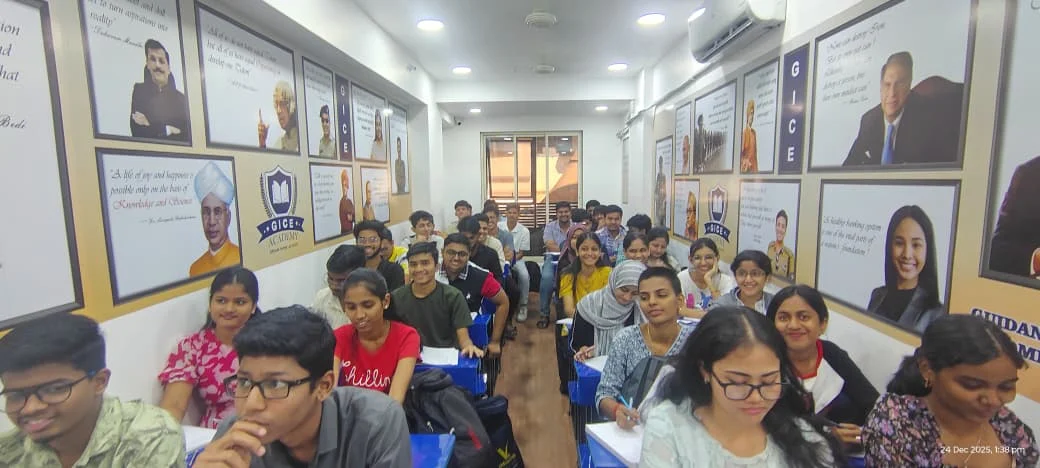
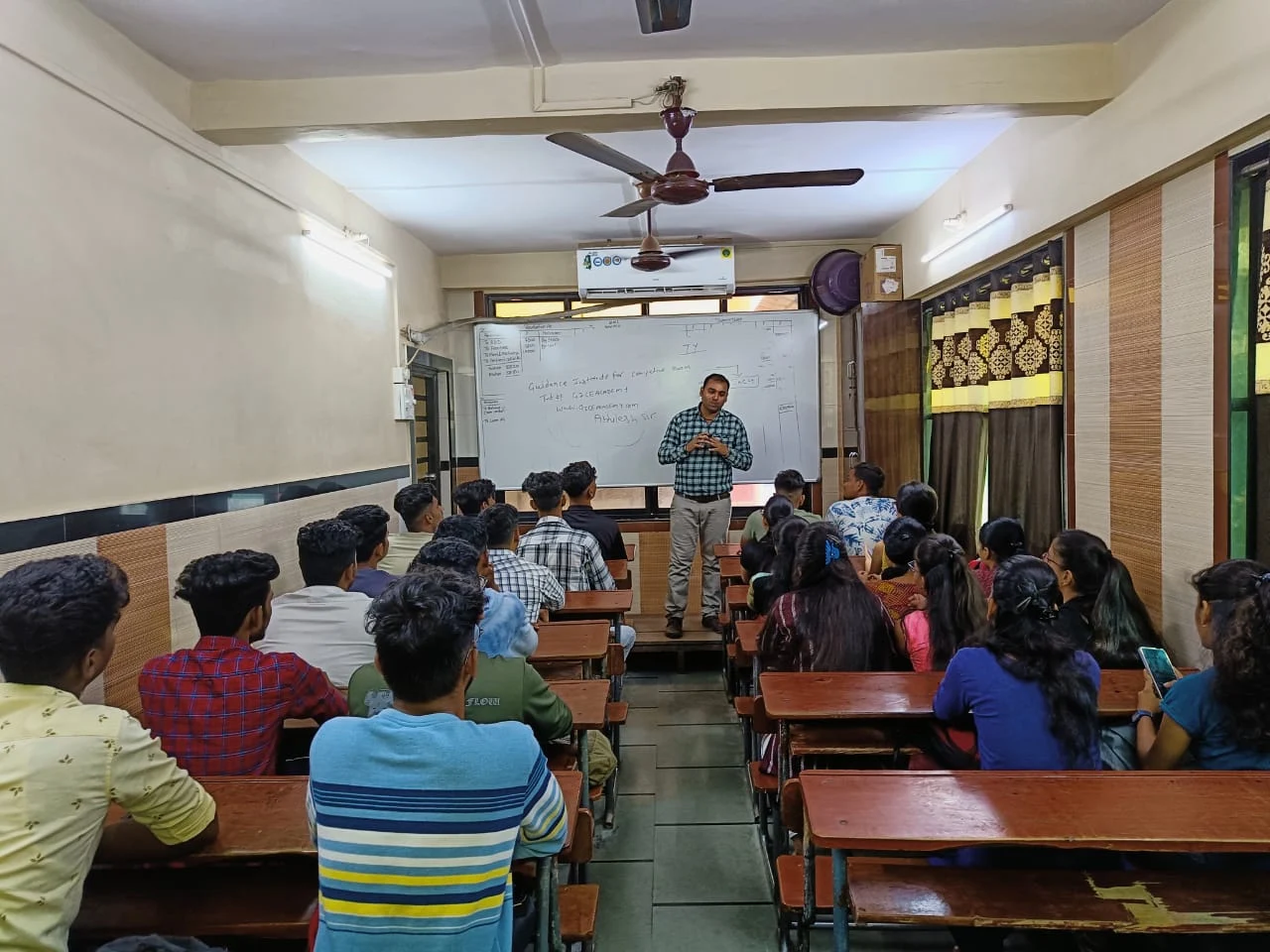
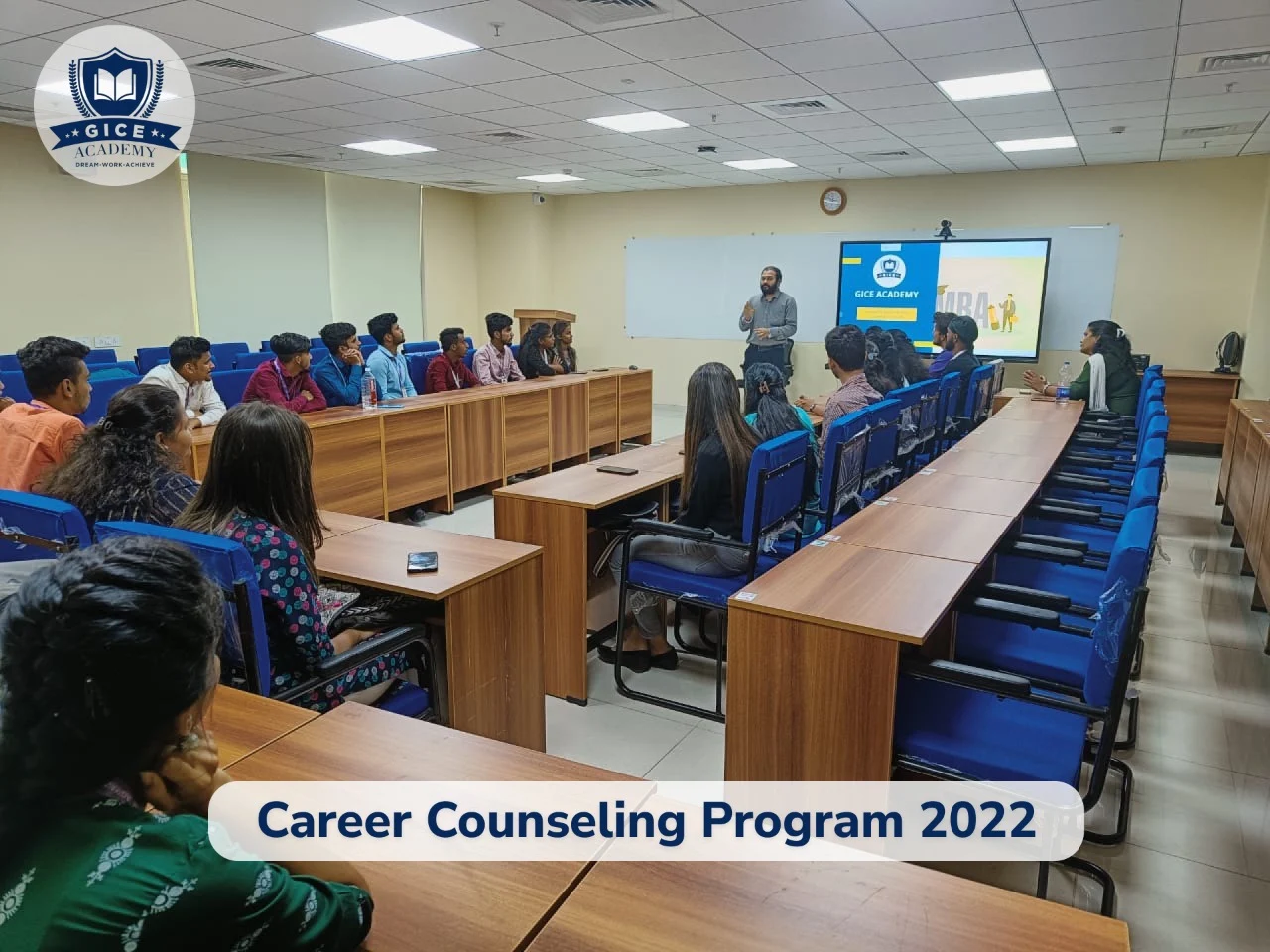
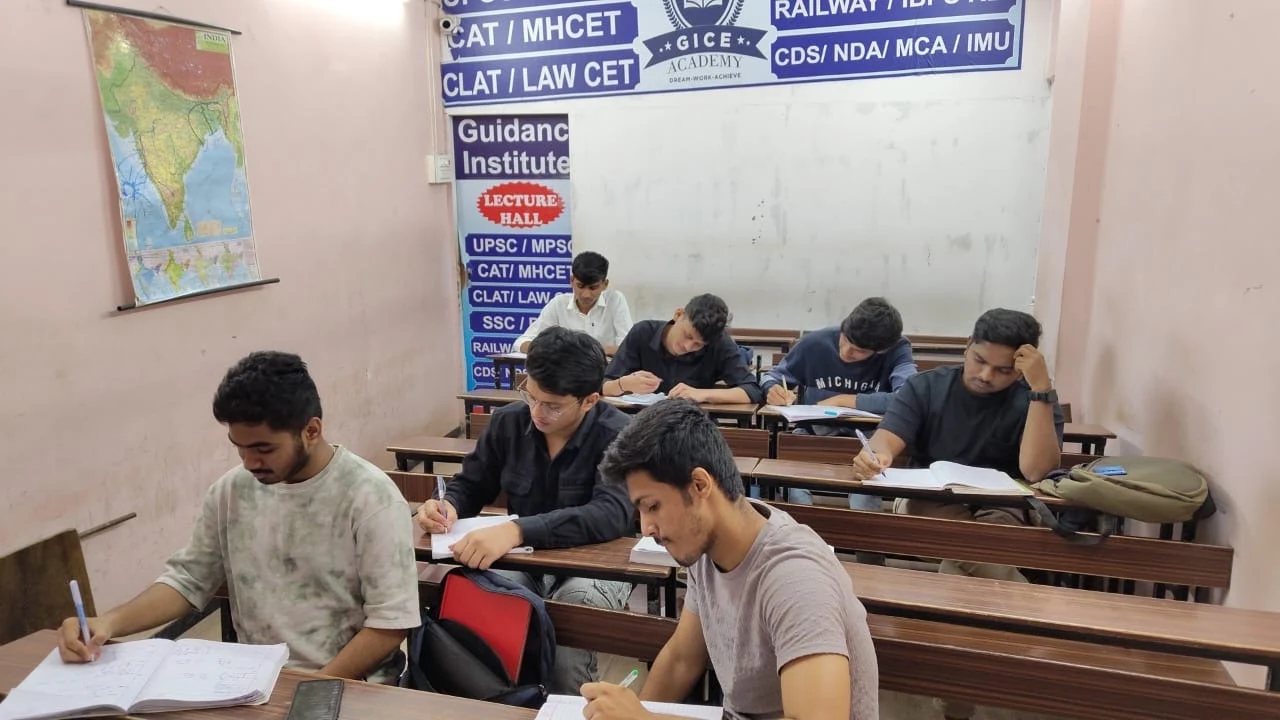
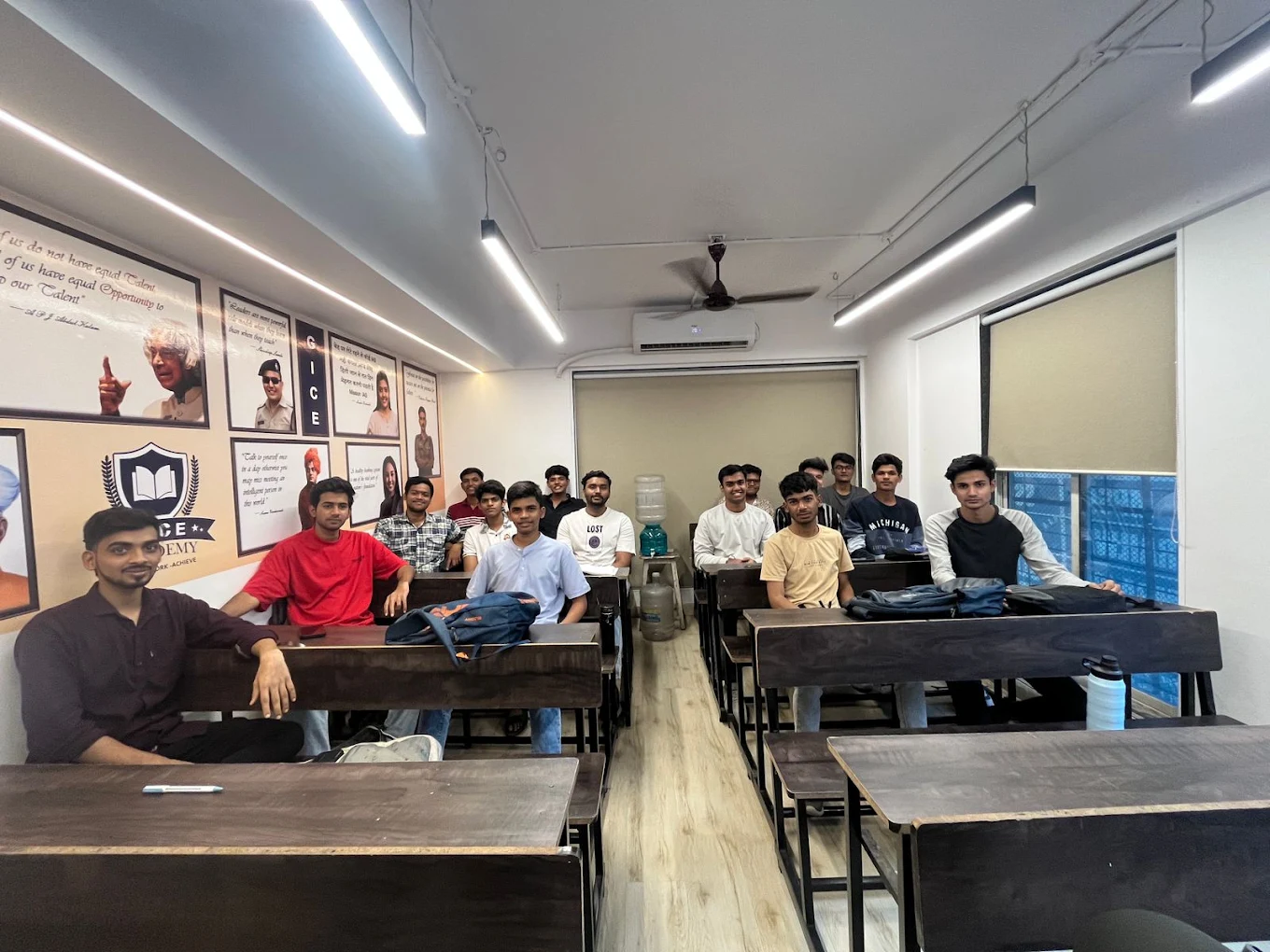
Explore the learning environment and classroom sessions at GICE Academy.
CMAT (Common Management Admission Test) is a national-level, computer-based entrance examination conducted by the National Testing Agency (NTA) for admission to MBA/PGDM programmes at AICTE-approved institutes across India.
CMAT-2026 has 100 questions across five sections (20 each), for a total of 400 marks, with +4 for every correct answer and -1 for every incorrect answer, in a 180-minute computer-based test.
Candidates must hold a Bachelor's Degree in any discipline (final-year students can also apply, subject to conditions) and be a citizen of India. There is no upper age limit.
CMAT percentile reflects a candidate's performance relative to other candidates who appeared for the exam (or the relevant shift), rather than the raw percentage of marks scored.
CMAT scores are accepted by many AICTE-approved management institutes, university departments, constituent colleges and affiliated colleges across India. Always verify current cut-offs on official sources.
Yes — sectional tests, topic tests and full-length mock tests simulating the real 180-minute format, along with detailed performance analysis, are built into the preparation journey.
[Your full address here — building, street, landmark, area, Dombivli, pincode]