
IMU CET — the Indian Maritime University Common Entrance Test — is the national-level, computer-based gateway examination that decides admission to undergraduate and postgraduate maritime programmes offered by the Indian Maritime University and its DG Shipping-approved affiliated institutes across India. IMU itself is a central university functioning under the Ministry of Ports, Shipping and Waterways, Government of India, offering specialised education in nautical science, marine engineering, naval architecture and ocean engineering, and maritime management.
Because IMU CET is not one uniform test — eligibility, subjects, and even exam pattern differ across the undergraduate and postgraduate streams — our Ulhasnagar centre starts by helping each candidate confirm their target programme first, since that decision shapes everything that follows in their preparation.
From there, preparation combines syllabus-based teaching across Mathematics, Physics, Chemistry, English and General Aptitude, regular previous-year question practice, and full-length mock tests formatted to the real exam, together with the mentorship and doubt-solving support a technical, high-stakes entrance exam like this genuinely needs.
4+ UG Maritime Programmes Covered
3 Hour Computer-Based Test Duration
200 Questions in the UG Paper (Current Cycle)
5 Core Subjects Taught — Maths to Aptitude
Ulhasnagar has coaching options for nearly every entrance exam, so we've stayed deliberately focused on the things that actually move an IMU CET candidate's score and admission outcome.
UG and PG streams have different eligibility, subjects and exam patterns. We help each candidate confirm their target programme early and build a plan around its specific requirements, not a generic science course.
Mathematics, Physics, Chemistry and English are taught for genuine understanding, not last-minute memorisation, since IMU CET questions are frequently application- and calculation-heavy.
Timed, exam-format practice papers build the question-selection judgement candidates need for a test where incorrect answers can cost marks.
From eligibility and DG Shipping medical fitness standards to the counselling and document verification process, we support students through the full admission journey, not just the test.
IMU CET is not a single uniform test — the relevant programme, eligibility, and in some cases the exam pattern, differ across streams. Candidates should confirm exact, current requirements from the latest official notification at imu.edu.in.
Ship machinery, engine-room systems and marine technical operations — a core route into shipboard engineering roles.
Ship design, structural engineering and ocean/offshore engineering principles.
Navigation, seamanship and deck operations — the foundation for the deck-officer career pathway.
Advanced marine engineering specialisation, and maritime business, port and shipping management programmes.
Programme availability, intake and exact entrance requirements can change with every admission cycle. Always confirm the current list of programmes against the latest official IMU CET notification at imu.edu.in before finalising your target programme.
Eligibility is programme-specific — UG and PG requirements differ meaningfully, so always confirm exact figures against the latest official notification.
Class 12 (10+2) pass or appearing, with Physics, Chemistry and Mathematics, scoring at least 60% aggregate in PCM and 50% in English (SC/ST relaxation of 5% typically applies to PCM marks only).
A programme-specific upper age limit applies for UG programmes, with relaxation for OBC(NCL)/SC/ST candidates — always verify current limits officially, as age-limit norms for maritime programmes have historically been stricter than for many other entrance exams.
Candidates for seagoing UG programmes are typically required to meet DG Shipping medical fitness standards, including normal colour vision and adequate binocular vision, assessed by an approved medical practitioner.
A relevant bachelor's/engineering degree with a minimum aggregate (commonly around 60%, with SC/ST relaxation as officially notified) — exact requirements vary by the specific PG programme.
GICE Academy does not provide medical advice or medical clearance. Eligibility conditions differ by programme and are revised with every admission cycle — always verify current details from the official IMU CET notification and, where relevant, consult an approved medical examiner well before applying.
The syllabus for undergraduate programmes is drawn broadly from the Class 11 and Class 12 curriculum in Physics, Chemistry and Mathematics, along with English language skills and General Knowledge/Aptitude. Treat the breakdown below as a preparation guide and check it against the latest official syllabus.
Relations & Functions, Inverse Trigonometric Functions, Matrices, Determinants, Continuity & Differentiability, Applications of Derivatives, Integrals & their Applications, Differential Equations, Vectors, Three-Dimensional Geometry, Linear Programming, Probability.
Electrostatics, Current Electricity, Magnetic Effects of Current & Magnetism, Electromagnetic Induction & Alternating Currents, Electromagnetic Waves, Optics (Ray & Wave), Dual Nature of Radiation & Matter, Atoms & Nuclei, Semiconductor Electronics.
The figures below reflect the pattern reported for the undergraduate (B.Tech-stream) computer-based test in the current admission cycle — postgraduate programmes may differ, and any pattern can be revised by IMU for a future cycle.
| Parameter | Specification |
|---|---|
| Mode | Computer-Based Test (CBT), at designated centres across India |
| Duration | 3 hours |
| Number of Questions | 200 (reported for the current cycle) |
| Sections | Physics, Chemistry, Mathematics, English, General Knowledge, General Aptitude |
| Question Type | Multiple-choice questions (MCQs) |
| Marking Scheme | Marks awarded per correct answer, as specified officially |
| Negative Marking | Reported for the current cycle — confirm exact value officially |
| Language | English |
Exact marks, question count and the negative-marking value can be revised by IMU each cycle. Treat these figures as a preparation guide and confirm current-year details officially before finalising your strategy.
Not every stage below applies identically to every programme — check the notification for your specific target programme to confirm which stages apply to you.
Register on the official IMU portal within the notified window
Structured, syllabus-based study and practice
Appear at the allotted computer-based test centre
Check your scorecard and national merit rank
Exercise programme/campus preference in priority order
Document verification, fee payment, seat confirmation
Preparation is sequenced, not scattered — each phase builds on the last so students always know exactly where they are in the journey.
A baseline evaluation across Maths, Physics, Chemistry and English before class one.
Concept-first teaching across every subject, prioritising understanding over memorisation.
Previous-year questions, sectional tests and full-length mocks formatted to the real IMU CET.
Detailed mock-test review, an error log, and a planned revision cycle through to exam day.
IMU CET itself does not provide a career or a job — clearing it only provides entry into a maritime education programme. What follows academic education, and for many programmes, mandatory training, sea service and statutory certification, is what actually builds eligibility for maritime career pathways.
Shipboard engineering roles and shore-based maritime technical roles, subject to further training, certification and sea service.
Deck-department and officer-track roles, progressing through statutory certification defined by maritime authorities.
Shipbuilding and design roles, structural engineering, the offshore sector, and maritime engineering consulting.
Port, shipping and logistics management roles through MBA Port & Shipping and related PG programmes.
GICE Academy does not guarantee employment, placement, rank, admission, or salary outcomes of any kind. Career progression in maritime professions typically requires additional training, statutory certification, ongoing medical fitness, and mandatory sea service where applicable — verify all current requirements through official maritime authorities and IMU.
Guidance Institute for Competitive Exams was founded in 2018 with a vision to provide effective and qualitative education for competitive examinations. Our strength lies in our dedicated and experienced faculty. GICE Academy has emerged as a leading competitive exam institute in Thane with a strong focus on student success.
Career With Us





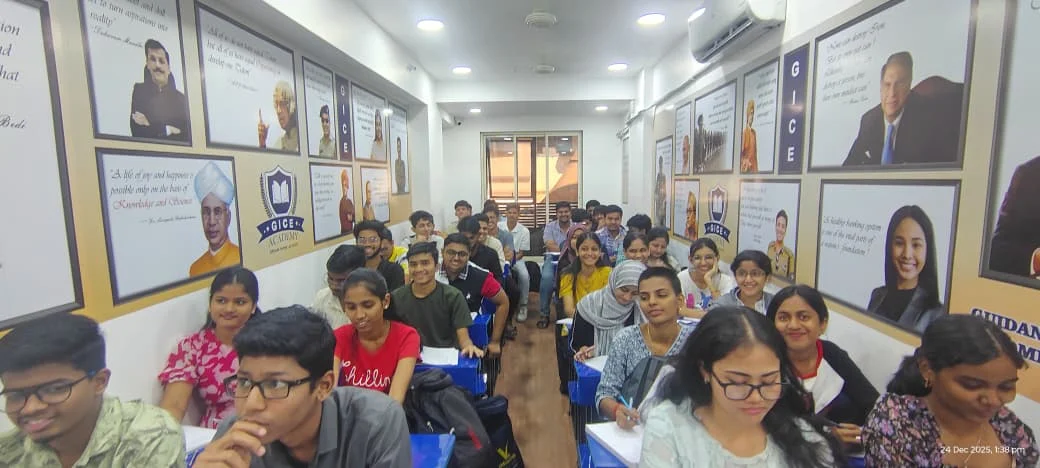
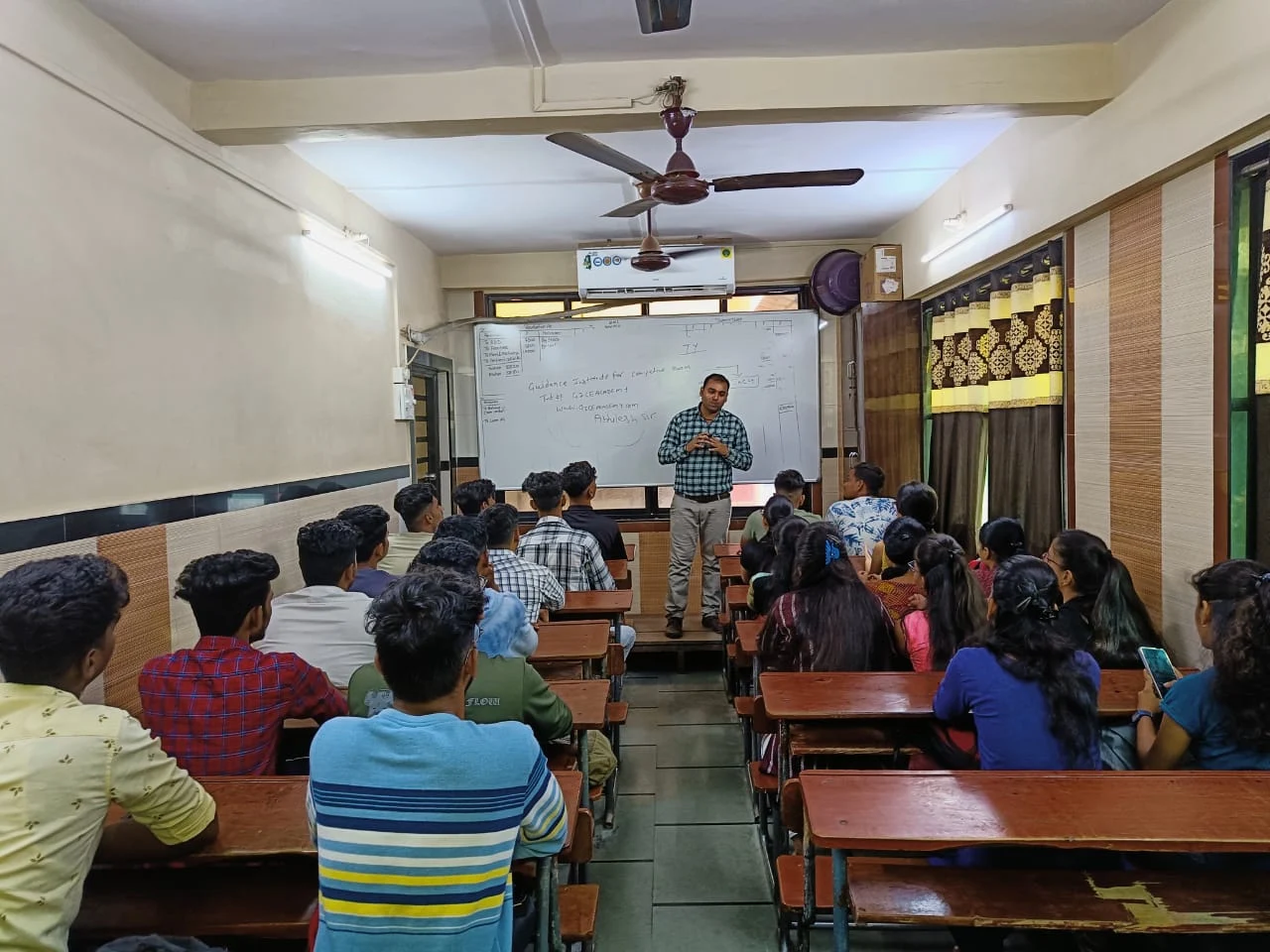
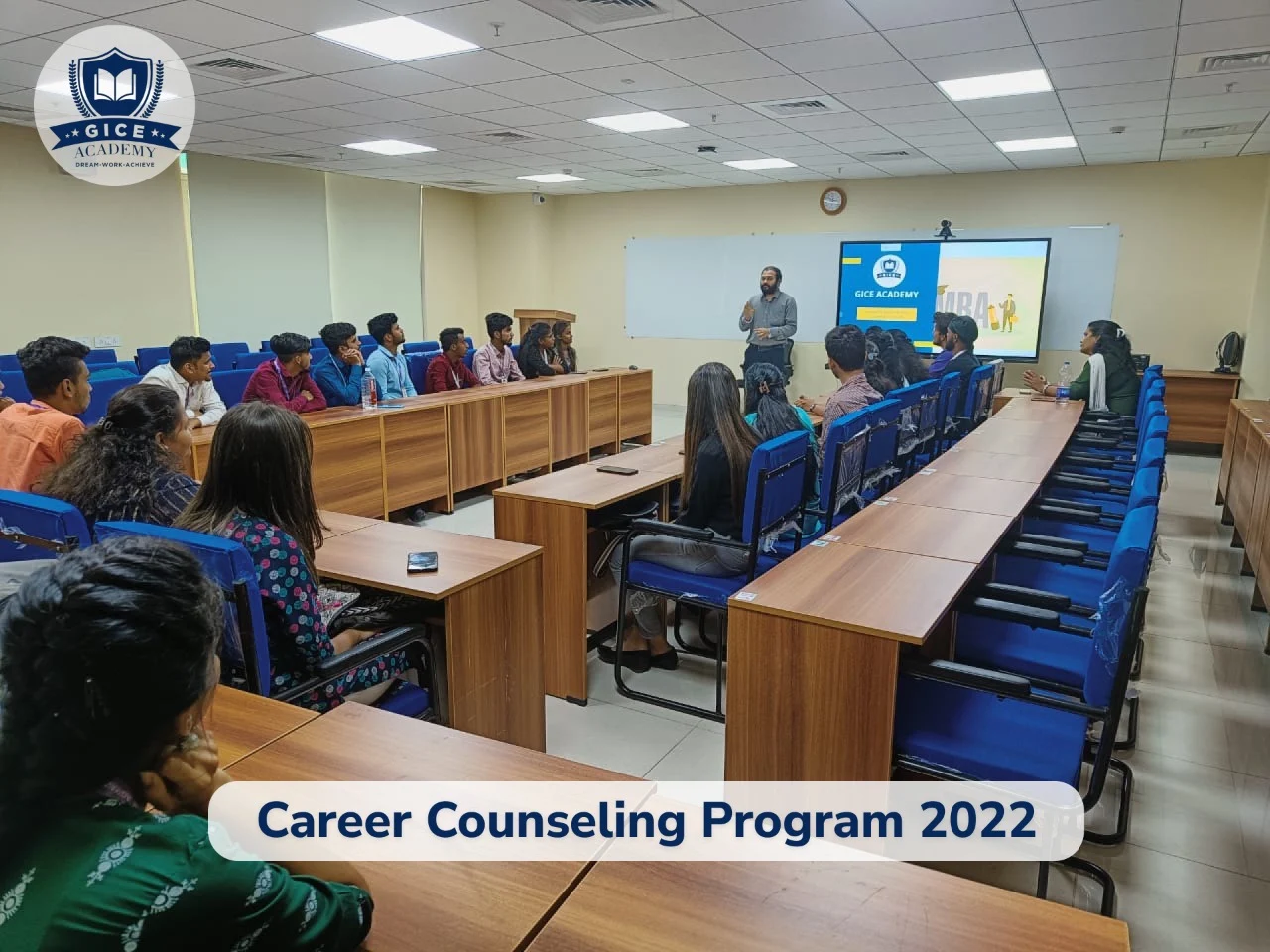
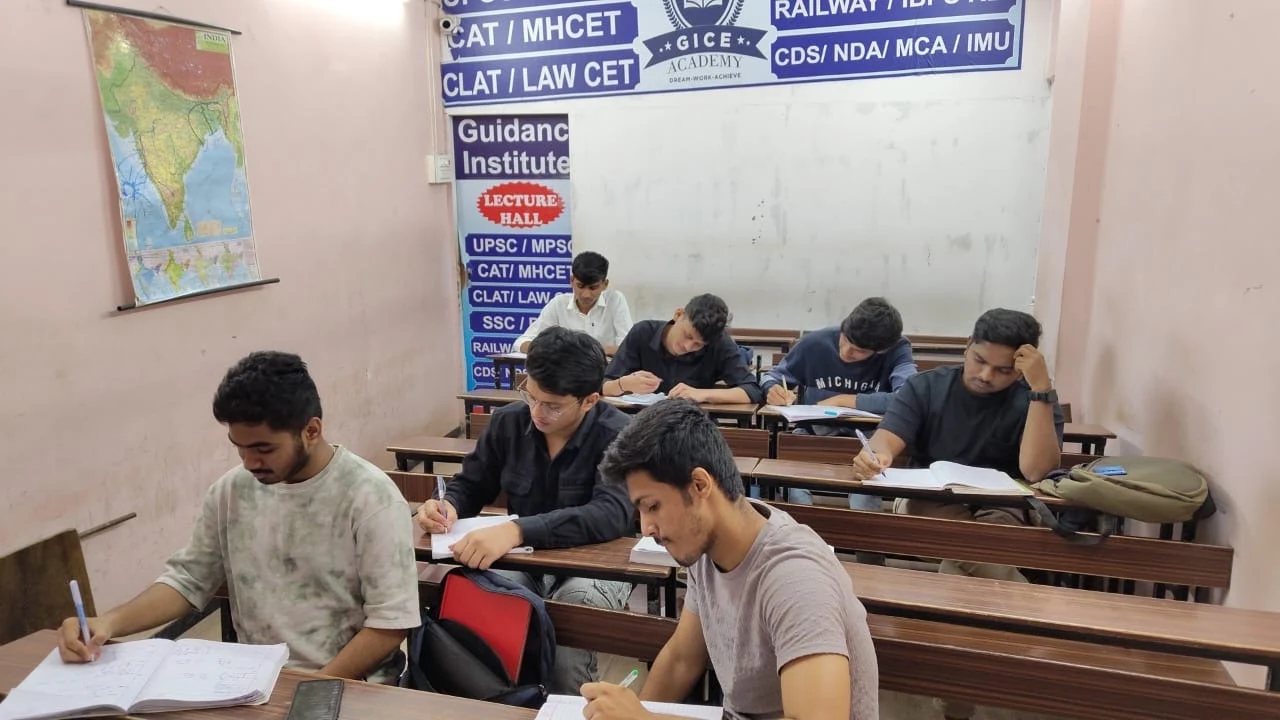
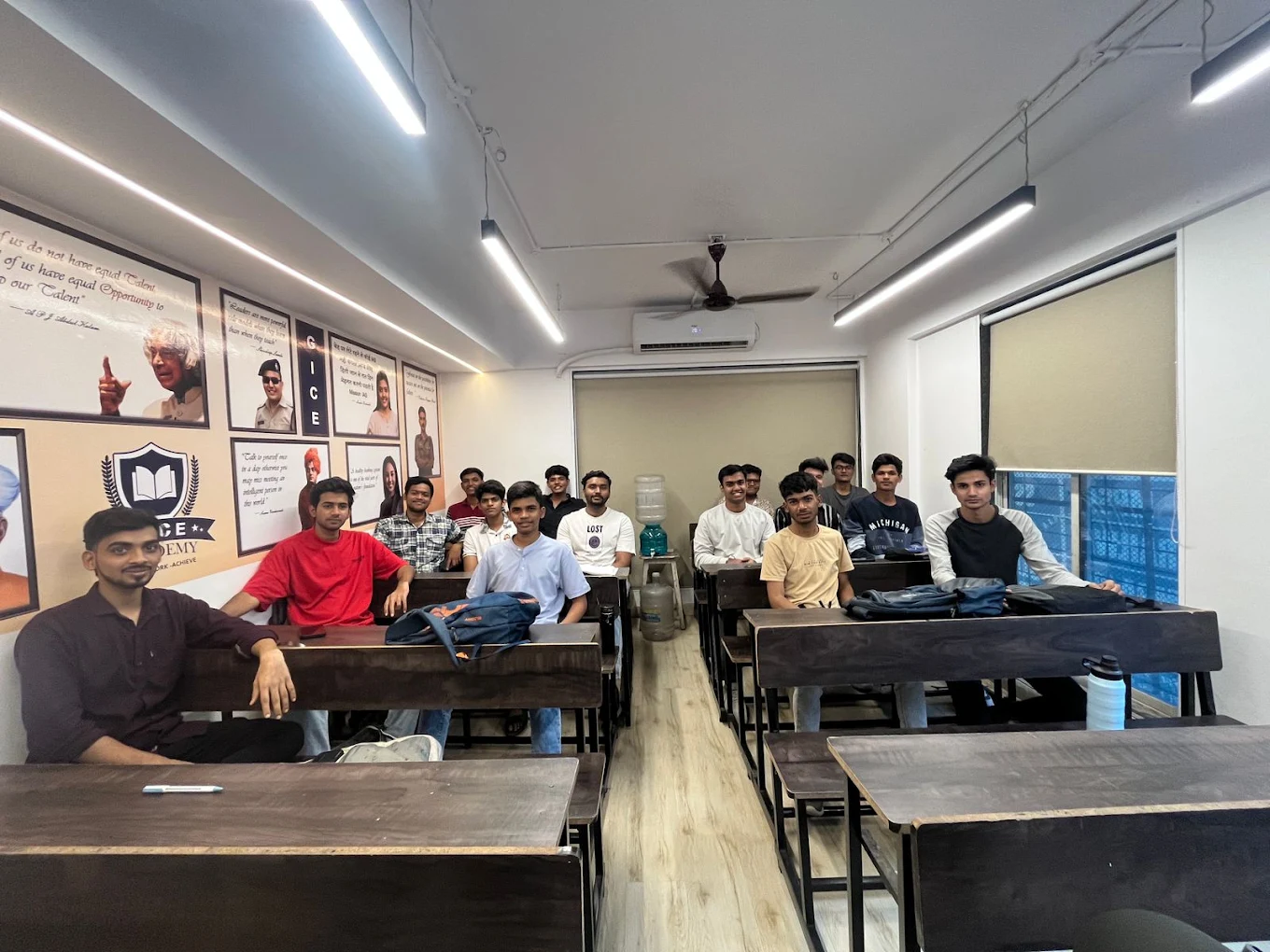
Explore the learning environment and classroom sessions at GICE Academy.
IMU CET is the Indian Maritime University Common Entrance Test — a national-level, computer-based exam for admission to maritime programmes offered by IMU and its affiliated institutes.
Candidates must have passed or be appearing for Class 12 with Physics, Chemistry and Mathematics, scoring at least 60% aggregate in PCM and 50% in English, along with a programme-specific age limit.
A computer-based test with 200 questions across Physics, Chemistry, Mathematics, English and General Knowledge/Aptitude, conducted over 3 hours, with negative marking as specified in the official notification.
Yes — candidates for seagoing programmes are typically required to meet DG Shipping medical fitness standards, including colour vision and binocular vision checks by an approved medical examiner.
Depending on the current admission cycle, programmes may include B.Tech Marine Engineering, B.Tech Naval Architecture & Ocean Engineering, B.Sc. Nautical Science, DNS, and PG programmes like M.Tech and MBA Port and Shipping Management.
No. IMU CET provides entry into a maritime education programme only — further mandatory training, sea service and statutory certification are required, and no employment outcome is guaranteed.
Yes — online batches run alongside our in-person sessions, with the same study material, mock test access, and faculty availability for doubts.
Yes — structured mock tests, previous-year question-paper practice, detailed performance analysis, and ongoing faculty mentorship are built into the preparation journey.
[Add your Ulhasnagar centre address here — building, street, landmark, area, pincode]