
"MCA Entrance Exam" is a broad, umbrella term — it does not refer to a single, common examination. Admission to Master of Computer Applications programmes across India is based on a mix of pathways, including state-level tests like MAH MCA CET, national-level tests like NIMCET, the broader CUET-PG, and university-specific admission tests.
Because of this, the single most important early step is identifying the university or institute a student wants to join, and then confirming exactly which entrance examination that institution accepts. Preparing for the right exam, with the right syllabus, saves significant time and effort.
Our Thane centre supports MCA aspirants through examination-specific concept building, guided practice, realistic mock tests matched to the target exam, detailed performance analysis, and personalised faculty mentorship, following a simple philosophy: Learn → Practise → Test → Analyse → Improve → Revise.

Major Pathways — MAH MCA CET, NIMCET, CUET-PG
NITs Participating in NIMCET (Recent Cycles)
Core Skills Across Every Exam — Maths & Reasoning
Full-Time MCA Programme Duration
MCA admission is not governed by a single national test — so our Thane programme starts with identifying the right exam for each student, then builds preparation specific to it.
Before opening a single book, we help students identify which college or set of colleges they are aiming for, and exactly which entrance examination those institutions accept.
Mathematics carries significant weightage in most major MCA entrance exams. We build concept clarity topic by topic before layering in timed, exam-specific practice.
MAH MCA CET has no negative marking; NIMCET deducts 25% per wrong answer. We tailor question-selection strategy and mock tests to each student's actual target exam.
For exams like NIMCET and MAH MCA CET that include these sections, we build them into the regular teaching cycle rather than treating them as optional extras.
The exact exam a student needs depends entirely on the college or state they're targeting. These are the major pathways used for MCA admission in India.
Conducted by the State CET Cell, Maharashtra, for MCA admission at government, aided and private institutions across the state.
Conducted annually, on a rotational basis, by a participating NIT, for admission to MCA programmes at NITs and select IIITs.
Conducted by the NTA; MCA is one of many programmes covered, with scores used by participating universities for their own MCA admission process.
Several universities and institutes conduct their own independent MCA entrance test, or use merit-based admission on qualifying-degree marks.
Eligibility, syllabus, exam pattern and admission process differ across these examinations. Always verify current details from the specific exam's official conducting body before starting preparation.
Eligibility depends entirely on which entrance examination and institution a student is targeting — there is no single, universal rule across all MCA entrance exams.
A bachelor's degree in any stream, with Mathematics studied at the 10+2 level or during graduation, and a minimum aggregate of around 50% (around 45% for reserved categories).
A bachelor's degree of at least three years, in any discipline, with Mathematics or Statistics as a subject (or a BE/BTech degree), and a minimum aggregate of around 60% or 6.5 CGPA.
A bachelor's degree or equivalent qualification. Final-year students are generally permitted, subject to passing before counselling. No NTA-wide age limit.
Meeting an exam's basic eligibility doesn't guarantee you meet a specific institute's admission requirements — always check each target institute's own page.
Eligibility conditions are set independently by each conducting body and can change every cycle. Always verify current details from the official notification of your specific target examination.
Most MCA entrance exams draw on a broadly similar set of preparation areas, even though the exact topics, weightage and depth differ by exam.
Number system and arithmetic, percentages, ratio and proportion, profit and loss, averages, time and work, time-speed-distance, algebra and equations, coordinate geometry, mensuration, trigonometry, probability and statistics, permutation and combination, set theory, and data interpretation.
Logical sequences and number series, coding-decoding, blood relations and direction sense, analogy and classification, syllogisms, statements and conclusions, arrangements and puzzles, and data sufficiency.
Based on recent examination cycles. Question counts, marks, duration and negative-marking rules are set independently each year by each conducting body — always verify current-cycle figures officially.
| Exam | Questions | Duration | Negative Marking |
|---|---|---|---|
| MAH MCA CET | 100 (4 sections) | ~90 minutes | None (recent cycles) |
| NIMCET | 120 (4 sections) | ~2 hours | 25% per wrong answer |
| CUET-PG (MCA subject) | ~75 | As per NTA schedule | As per NTA scheme |
Never assume the same pattern or marking scheme applies across all MCA entrance examinations. Always confirm current-cycle figures from your specific target exam's official notification.
The exact counselling and allotment process differs meaningfully by examination — MAH MCA CET's CAP rounds, NIMCET's centralised NIT/IIIT counselling, and each university's own process for CUET-PG are all distinct.
Based on preferred college(s) or state
Register within the official window
On the scheduled date
Score and, where applicable, rank
CAP, NIT counselling, or university process
Preparation follows a consistent, syllabus-first philosophy — Learn, Practise, Test, Analyse, Improve, Revise — with real feedback built into every stage.
Identifying the right entrance exam based on your preferred colleges and eligibility.
Strong fundamentals in Mathematics and Logical Reasoning, plus Computer Awareness and English where relevant.
Previous-year questions, sectional tests and full-length mock tests matched to your target exam's exact pattern.
Detailed performance analysis, mentorship, and a consolidated exam-day strategy for your target exam.
An MCA degree can open the door to a range of technology-oriented career pathways, depending on a graduate's skills, projects, internships and interests.
Roles as Software Developer, Full Stack, Backend or Frontend Developer, and Application Developer.
Roles as Data Analyst, Database Administrator and Systems Analyst.
Cloud-related roles, cybersecurity roles, and QA/Test Engineering.
Roles in IT consulting, business/technology analysis, and project or technology management pathways.
GICE Academy does not promise or guarantee any specific employment outcome, placement or salary. Career outcomes depend on a graduate's skills, projects, internships and individual employer requirements.
Guidance Institute for Competitive Exams was founded in 2018 with a vision to provide effective and qualitative education for competitive examinations. Our strength lies in our dedicated and experienced faculty. GICE Academy has emerged as a leading competitive exam institute in Thane with a strong focus on student success.
Career With Us





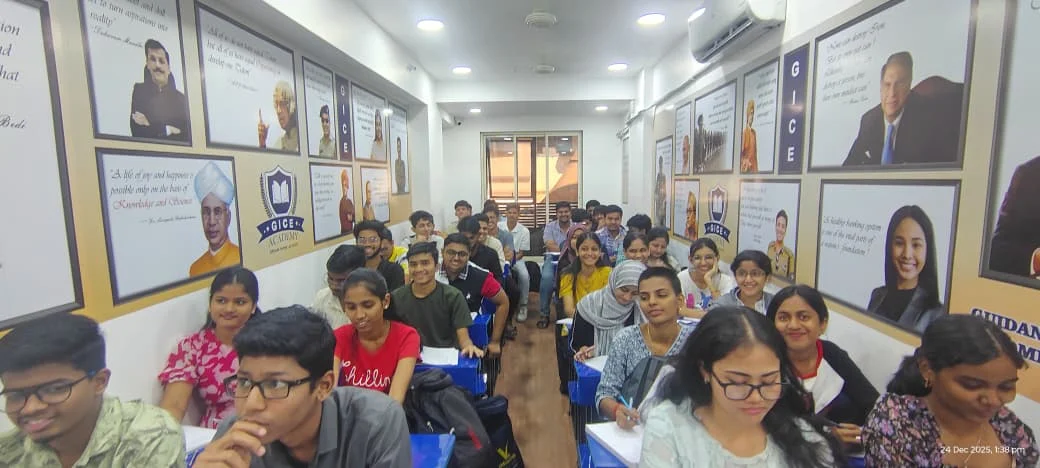
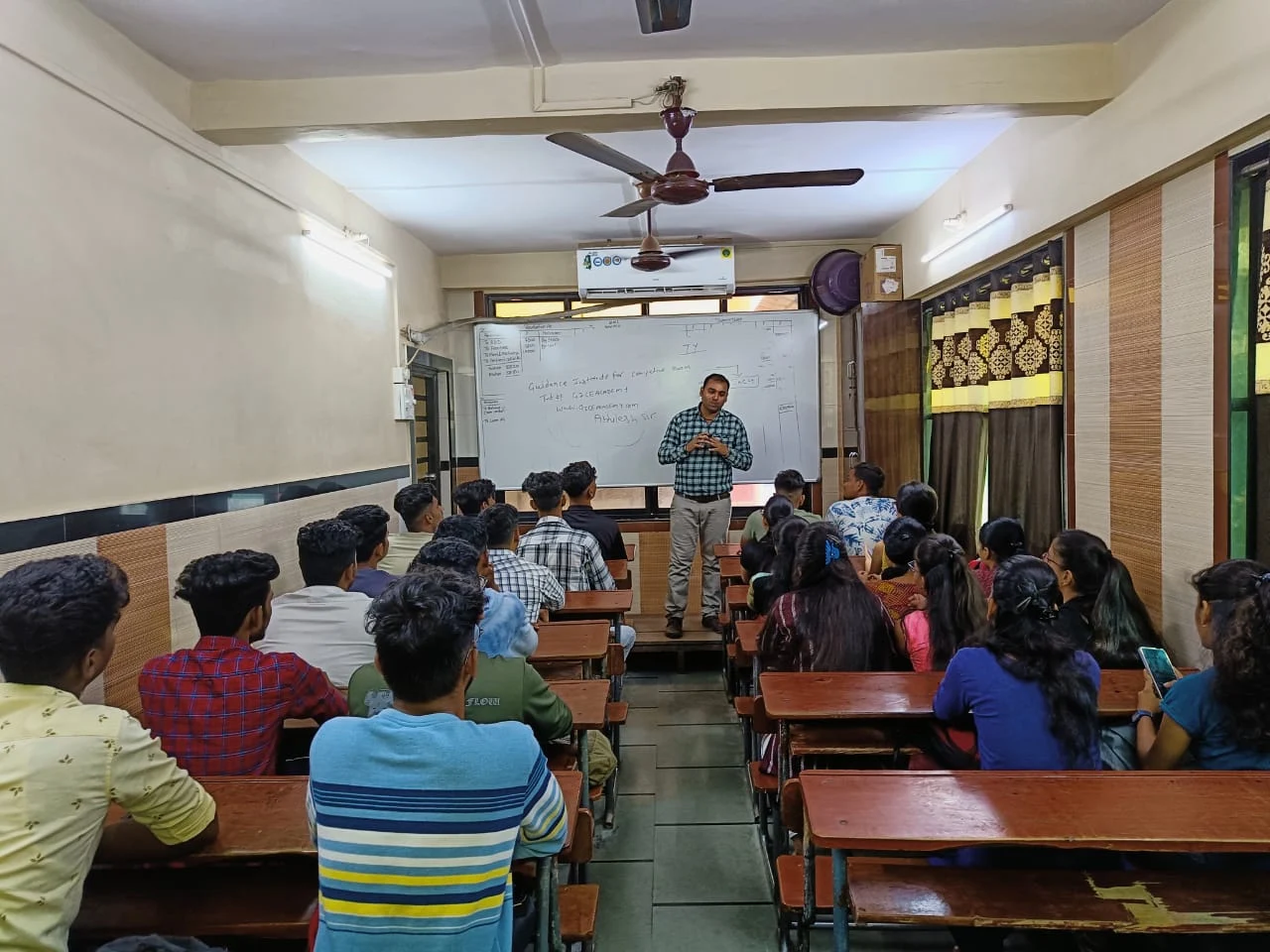
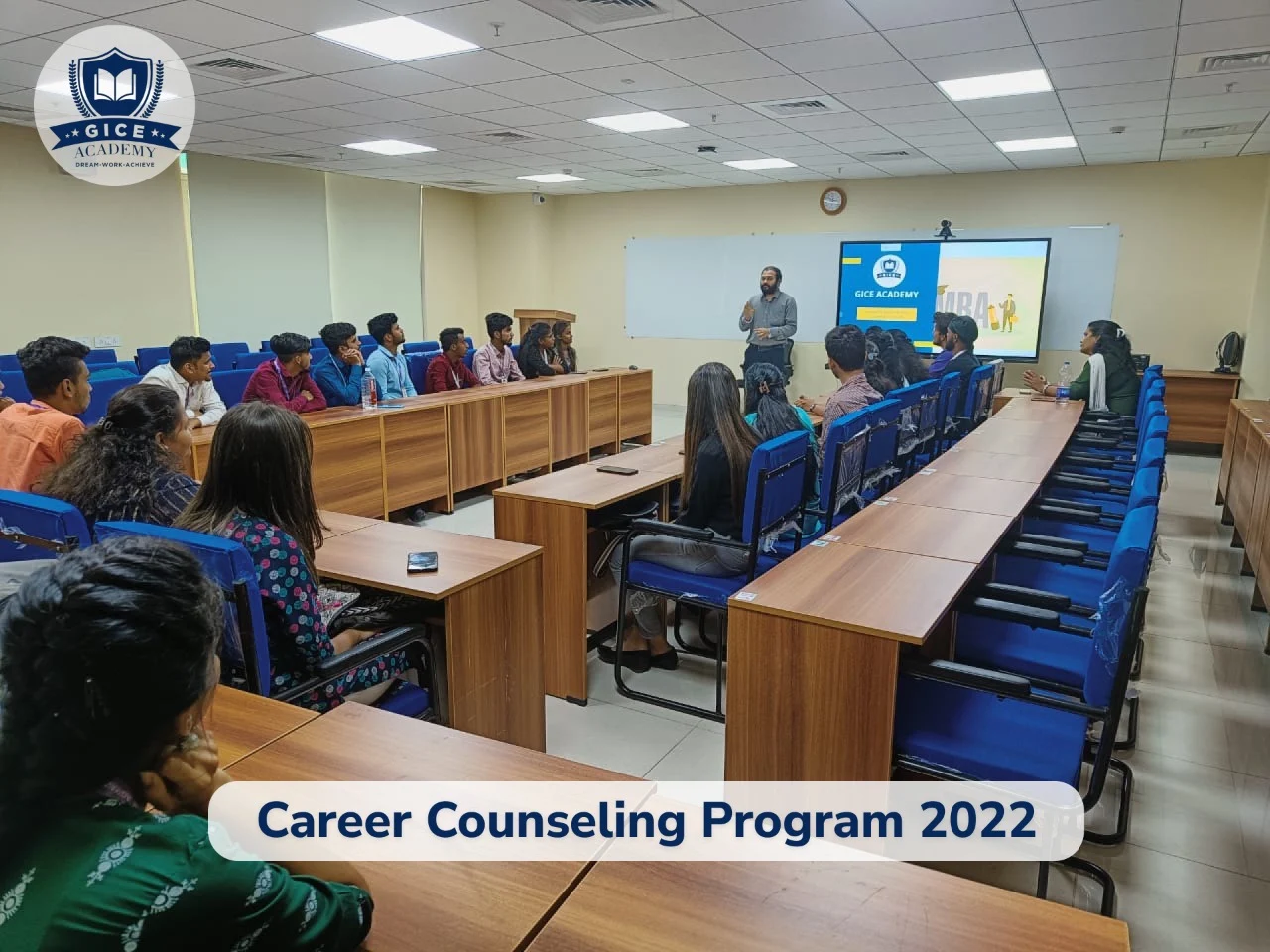
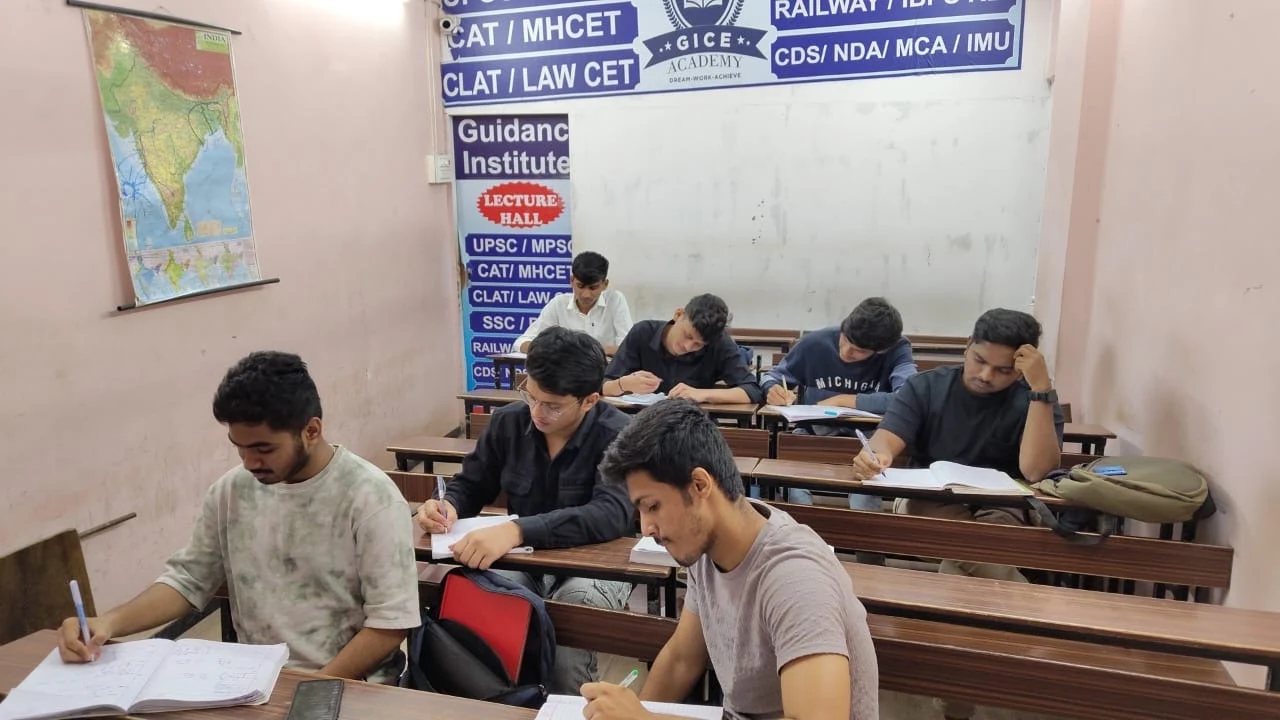
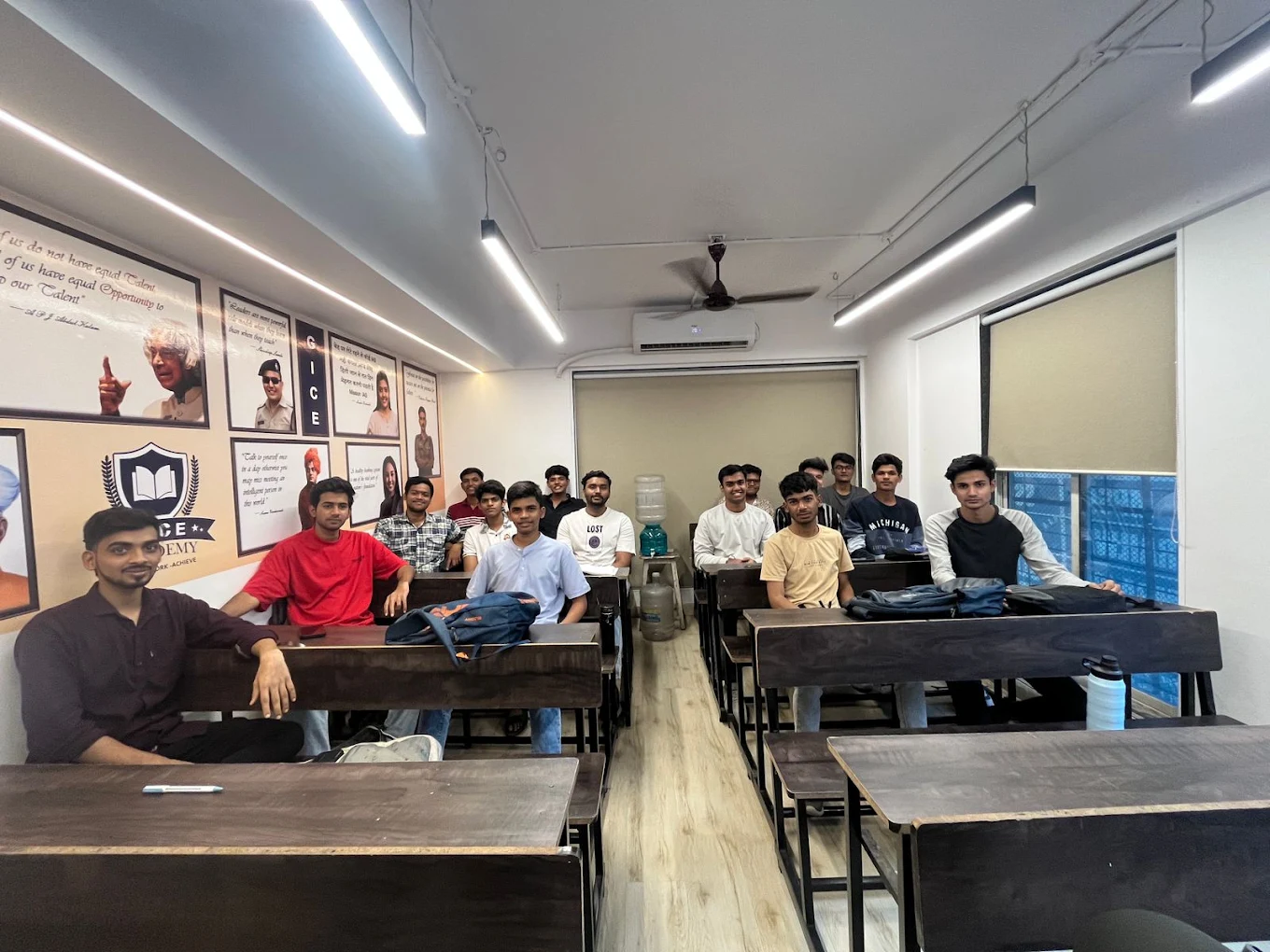
Explore the learning environment and classroom sessions at GICE Academy.
"MCA Entrance Exam" is a broad term covering several different examinations — such as MAH MCA CET, NIMCET and CUET-PG — used by different institutions for MCA admission. It is not a single, common test.
This depends on your target college or state. Identify your preferred institutions first, then confirm which entrance exam(s) they accept.
Many MCA entrance exams such as NIMCET and MAH MCA CET require or strongly test Mathematics. Requirements vary by exam, so check your target exam's specific conditions.
It depends on the exam. Recent MAH MCA CET cycles have not applied negative marking, while recent NIMCET cycles have deducted 25% per wrong answer.
Participating NITs and select IIITs accept NIMCET scores through centralised counselling; government, aided and private institutions across Maharashtra accept MAH MCA CET through the state's Centralised Admission Process.
Yes — examination-specific sectional tests, previous-year question practice and full-length mock tests matched to your target exam's pattern, along with detailed performance analysis, are built into the preparation journey.
[Your full address here — building, street, landmark, area, Thane, pincode]