
MPSC — the Maharashtra Public Service Commission — is a constitutional body, established under Article 315 of the Constitution of India, responsible for recruiting candidates into Maharashtra's state government services spanning administrative, police, revenue, taxation, clerical and technical roles. Every year, thousands of graduates across the state — including a large number from Thane — prepare for MPSC exams in the hope of securing a stable, respected government career.
Because MPSC does not conduct one uniform exam, our Thane centre helps candidates first identify their target examination — State Services (Rajyaseva), Group B or Group C — since the eligibility, syllabus and exam pattern differ meaningfully between them. From there, a personalised study plan is built around the actual demands of that exam.
Preparation combines structured subject-wise teaching, a continuous Maharashtra-focused current-affairs habit, previous-year question practice and regular mock tests, together with the mentorship and doubt-solving support that a syllabus of this scale and competitiveness genuinely needs.

Major MPSC Exam Categories — State Services, Group B, Group C
Possible Selection Stages, Prelims to Appointment
Objective Papers in the State Services Prelims
Constitutional Article Establishing MPSC
Thane has no shortage of coaching options, so we've stayed deliberately focused on the things that genuinely move a candidate through Prelims, Mains and beyond — not just exam-day marks.
State Services, Group B and Group C differ in eligibility, syllabus and paper structure. We help candidates identify their target exam early and build a plan around its specific requirements.
State history, geography, government schemes and current affairs carry meaningful weightage across nearly every MPSC exam — our material is built around this from day one, not added as an afterthought.
Timed, objective mock tests built around real question-selection pressure, so candidates learn when to attempt a question and when to leave it, not just how to answer it.
A long, wide-syllabus exam needs sustained guidance — realistic study plans, subject-specific support and mock-test analysis, all the way through to final revision.
MPSC runs several distinct recruitment processes, each with its own purpose, eligibility, syllabus and selection stages. Candidates should confirm exact, current requirements from the latest official MPSC notification on mpsc.gov.in.
Recruits Class I & II administrative officers — Deputy Collector, DySP, Tahsildar, BDO and similar roles. Objective Prelims followed by a largely descriptive Mains.
Recruits Police Sub-Inspector, State Tax Inspector and Assistant Section Officer. Common Prelims, then one common Main paper and one post-specific Main paper.
Recruits Clerk-Typist, Tax Assistant, Technical Assistant, Industry Inspector and AMVI. Common screening Prelims, cadre-specific Mains, and a typing test where applicable.
Recruitments for posts like Law Officer, Forest Service, Engineering Services, Medical Officer and Dental Surgeon, announced separately as vacancies arise.
Exact vacancies, posts, eligibility and selection stages for any MPSC examination can vary between notifications. Always verify current details from the official notification on mpsc.gov.in or mpsconline.gov.in.
Eligibility for MPSC exams depends on the specific examination and post — always confirm exact figures against the relevant notification.
Most MPSC examinations require a graduation degree from a recognised university, or an equivalent qualification recognised by the Government of Maharashtra. Industry Inspector and AMVI (Group C) require a specific engineering or science qualification, and some clerical posts require proof of typing proficiency.
Calculated as on a reference date fixed in each notification. As a general pattern, minimum ages are usually around 18–19 years, while maximum ages for open-category candidates commonly range from roughly 31 to 38 years depending on the post — PSI typically has a narrower band. Reserved-category candidates, PwD and ex-servicemen generally receive age relaxation per Maharashtra government rules.
Generally requires Indian citizenship. Maharashtra domicile is commonly required for state-specific reservation benefits, and working knowledge of Marathi is typically expected for most non-gazetted and clerical posts.
MPSC exams do not uniformly restrict the number of attempts — eligibility is generally governed primarily by the age limit rather than a fixed attempt cap, though this can differ by exam and category.
Eligibility conditions differ by examination and post and are published afresh with every notification. Always verify current details from the official MPSC notification before applying.
The MPSC syllabus differs by examination, but the broad subject areas below are commonly tested across most MPSC exams — always check the post-specific syllabus PDF for your target exam.
Current affairs (state, national, international), History (Maharashtra-specific and the Indian National Movement), Geography, Indian Polity, Economy, General Science, Environment, Maharashtra-specific administration and culture, and General Mental Ability / Aptitude.
Marathi and English (typically qualifying), Essay/Writing, General Studies covering History and Geography with special reference to Maharashtra, Polity, Economy and agriculture, Science and Technology, Environment and disaster management, and integrated current affairs.
The figures below reflect the general pattern seen in recent examination cycles and should be verified against the current MPSC notification before being relied upon.
| Exam | Papers | Approx. Marks | Approx. Duration |
|---|---|---|---|
| State Services (Rajyaseva) | 2 (GS + CSAT) | 200 each | 2 hours each |
| Group B (Combined) | 1 (GS + Aptitude) | ~100 | ~1 hour |
| Group C (Combined) | 1, CBT mode | ~100 | ~1 hour |
| Exam | Nature | Papers | Merit Basis |
|---|---|---|---|
| State Services (Rajyaseva) | Descriptive | Multiple compulsory papers (per latest notification) | GS + Essay papers; Interview marks added |
| Group B (Combined) | Largely objective | 2 — 1 common + 1 post-specific | Both papers |
| Group C (Combined) | Objective/descriptive, by cadre | Combined or independent, per cadre | Main paper(s) as per cadre |
MPSC confirms exact marks, paper counts and any structural change for each cycle in its official notification. Treat the figures above as a preparation guide and verify current-year figures officially before finalising your strategy.
Not every MPSC examination includes every stage below — check the notification for your specific exam to know exactly which stages apply to you.
Objective screening test
Primary merit-determining stage
State Services & select Group B posts
PSI physical, typing for Clerk-Typist
Education, age & category proofs
Where the post demands fitness standards
Preparation follows a consistent, syllabus-first philosophy — understand, build, practise, and revise with real feedback at every stage.
Identifying the target exam — State Services, Group B or Group C — and understanding its exact syllabus and pattern.
NCERT-level fundamentals layered with Maharashtra-specific material, topic by topic.
Timed, exam-like practice that builds real accuracy, speed and question-selection judgement.
Detailed mock-test review, a running mistake log, and systematic revision through spaced repetition.
The actual post you receive after clearing an MPSC exam depends on the specific examination, notified vacancies, your merit rank and preference — clearing an exam does not automatically guarantee a specific post.
Deputy Collector, Tahsildar, Block Development Officer and similar Class I/II posts through State Services.
Deputy Superintendent of Police (State Services) and Police Sub-Inspector (Group B), including a physical test and interview.
Positions within revenue and land-records departments, and State Tax Inspector / Tax Assistant posts.
Clerk-Typist, Technical Assistant, Industry Inspector and Assistant Motor Vehicle Inspector through Group C.
GICE Academy does not guarantee selection, rank, appointment or any specific outcome. Preparation quality and consistency contribute to results, but outcomes depend on each candidate's performance across all official stages and on notified vacancies.
Guidance Institute for Competitive Exams was founded in 2018 with a vision to provide effective and qualitative education for competitive examinations. Our strength lies in our dedicated and experienced faculty. GICE Academy has emerged as a leading competitive exam institute in Thane with a strong focus on student success.
Career With Us





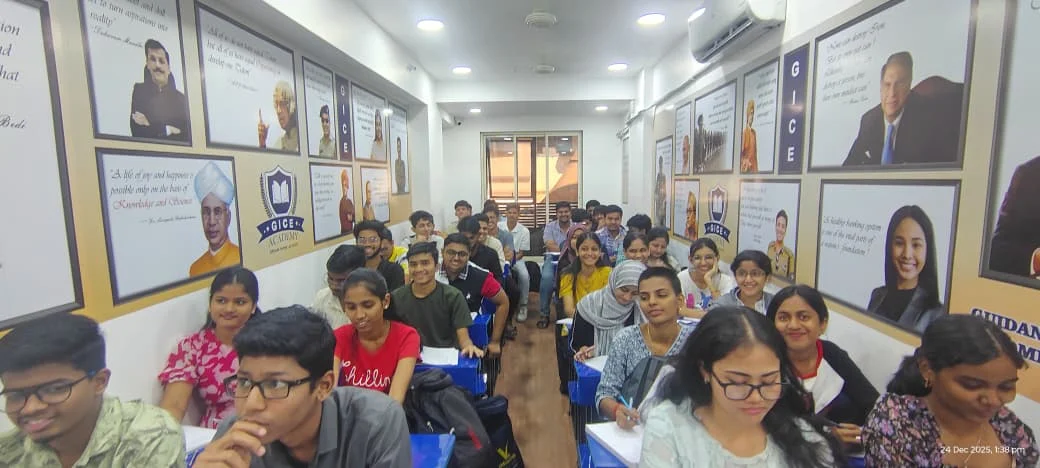
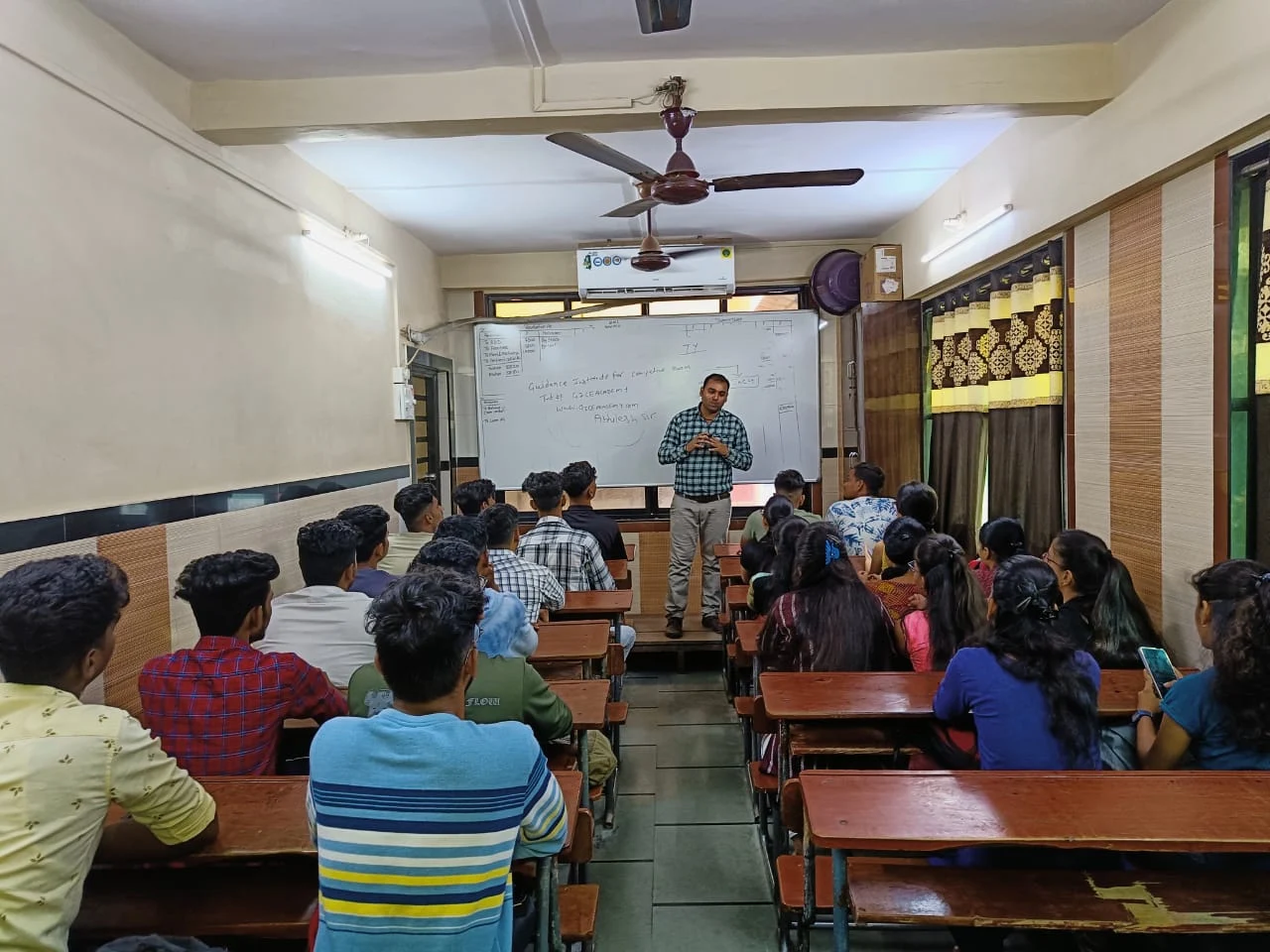
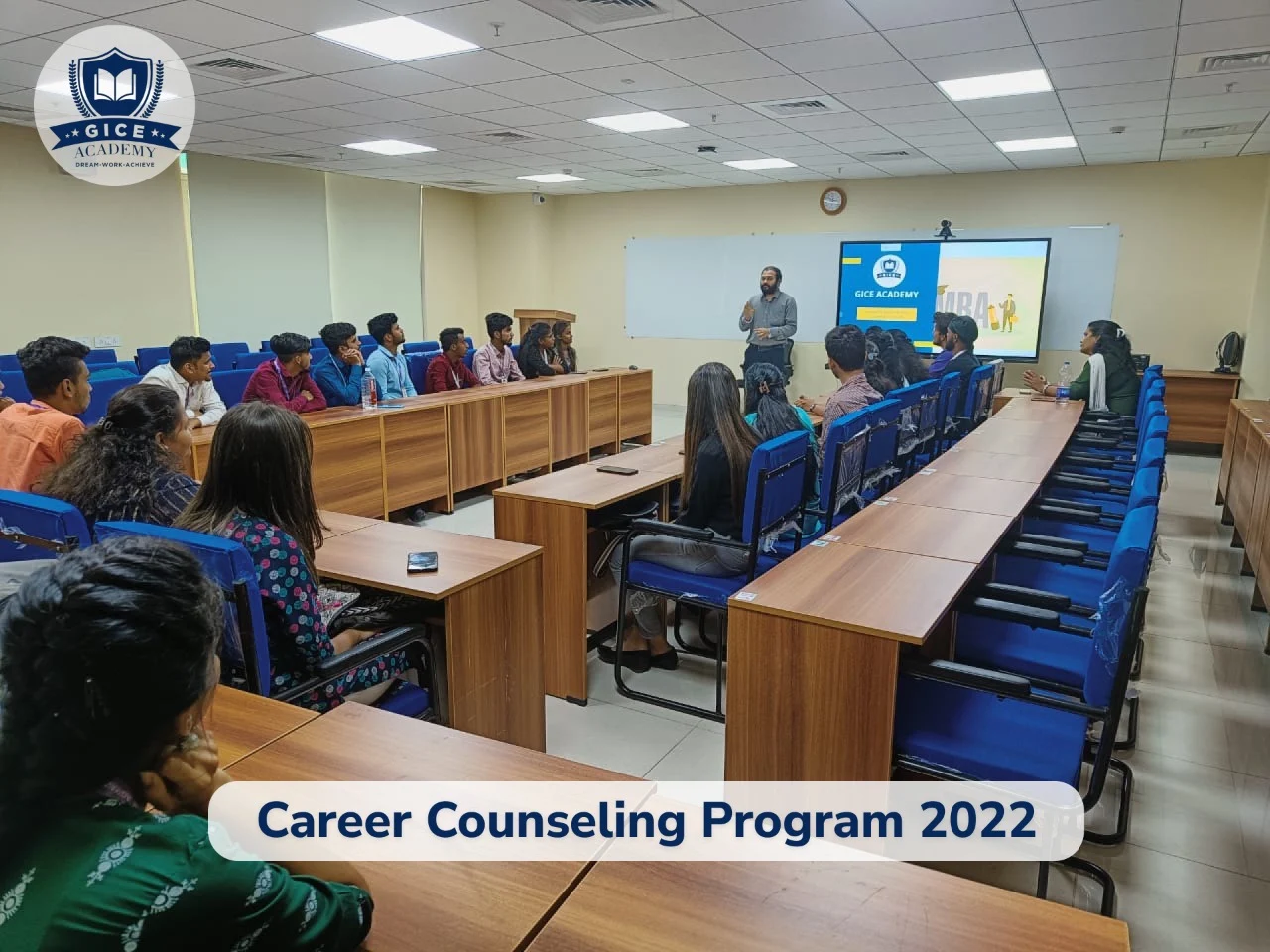
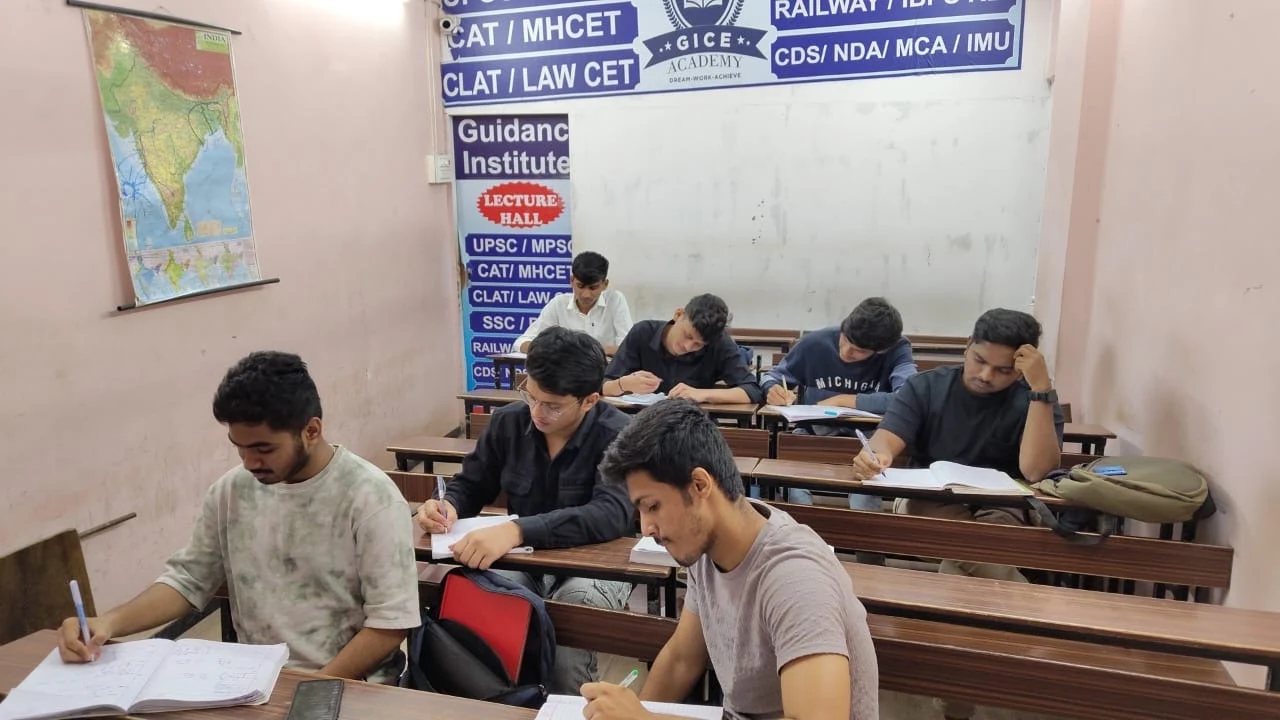
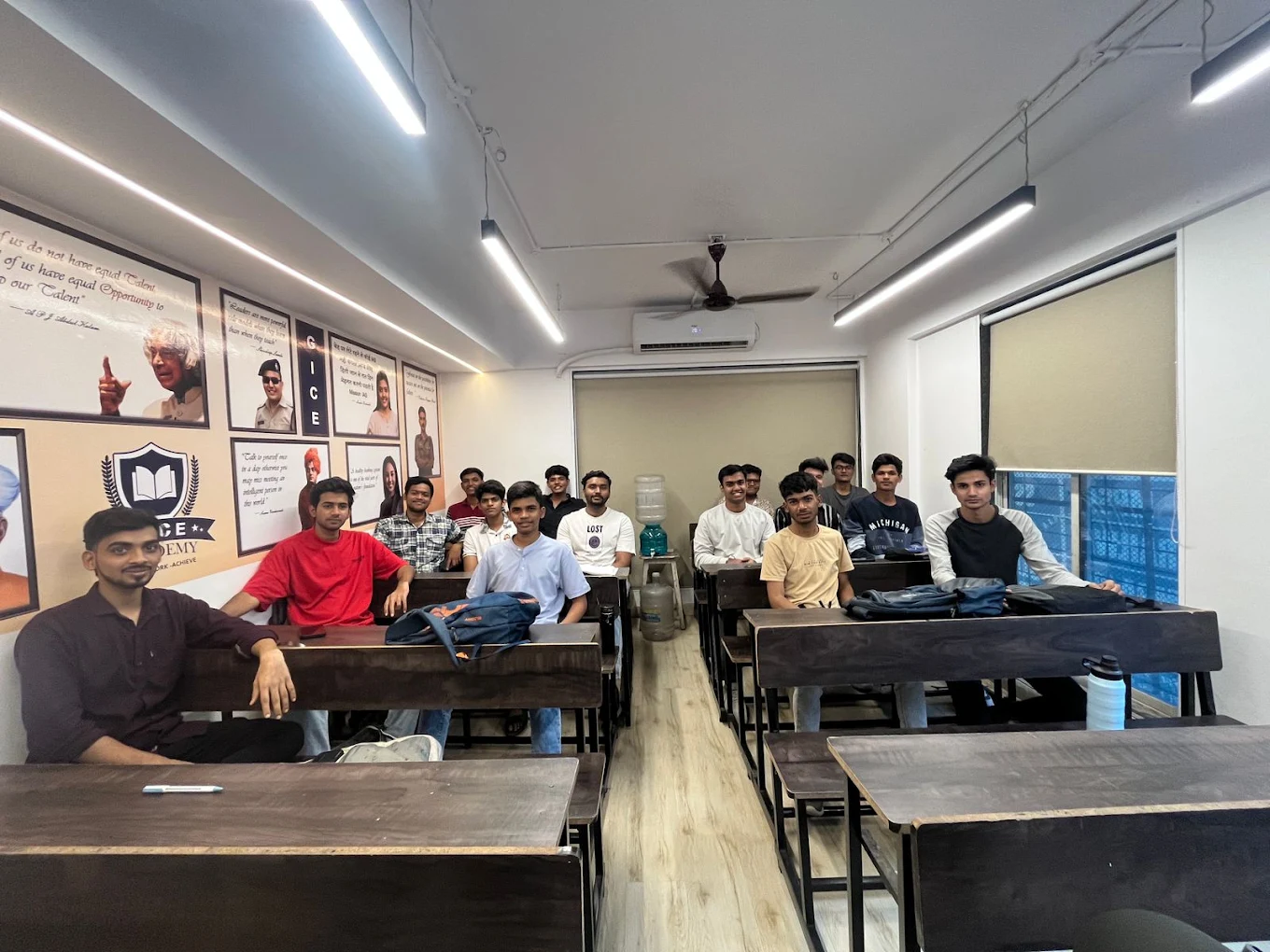
Explore the learning environment and classroom sessions at GICE Academy.
MPSC stands for the Maharashtra Public Service Commission, a constitutional body that conducts recruitment examinations and interviews for administrative, police, revenue and technical posts under the Government of Maharashtra.
It differs by examination. Broadly, it covers Current Affairs, History, Geography, Polity, Economy, General Science and, for Mains-level exams, Marathi, English and Essay writing — the exact syllabus depends on whether you're appearing for State Services, Group B or Group C.
There is no single pattern for all MPSC exams. State Services has a two-paper objective Prelims followed by multiple descriptive Mains papers and an Interview. Group B and Group C generally have a single-paper Prelims followed by post-specific Mains papers.
Age limits vary by exam, post and category, typically calculated as on a reference date set in each notification. Minimum ages are generally around 18–19 years, and maximum ages for open-category candidates commonly fall between roughly 31–38 years. Always confirm the exact limit from the current notification.
Depending on the exam, stages can include the Preliminary Examination, Main Examination, a Skill/Physical Test where applicable, an Interview where applicable, Document Verification, and a Medical Examination where applicable — not every exam includes every stage.
Yes — structured mock tests, previous-year question-paper practice and guided review are built into the preparation journey alongside subject-wise classroom teaching.
[Your full address here — building, street, landmark, area, Thane, pincode]