
Clearing the Civil Services Examination isn't about how many hours a candidate studies — it's about whether those hours are pointed at what UPSC actually tests. Our Dombivli centre exists precisely for that reason: a batch structure, a testing rhythm, and a faculty team all built around the real shape of the exam, not a generic "cover everything" syllabus dump.
Every student who joins us goes through a short diagnostic phase first — not a formality, but a genuine read on where they stand across the four core areas UPSC weighs most: static subject knowledge, current affairs application, answer-writing discipline, and time management under pressure. That diagnostic shapes the study plan we hand them, so no two students are on an identical track from day one.
Over the course of the programme, classroom teaching is paired with weekly writing practice, peer-reviewed answer evaluation, and structured revision cycles — the kind of repetition that turns knowledge into exam-ready recall rather than something read once and forgotten.

Years of UPSC-Focused Teaching
Weekly Mock Tests per Batch
Faculty Members Across Subjects
Aspirants Guided Since Inception
Dombivli has no shortage of coaching options, so we've stayed deliberately focused on the handful of things that actually move a candidate's score, rather than adding features for the sake of a longer brochure.
Every teacher on our team has spent years specifically inside the UPSC pattern — not general subject expertise borrowed from a college syllabus, but a working understanding of how the Prelims and Mains actually frame that subject, question by question.
The UPSC syllabus is intentionally vast. We don't hand students a static PDF and wish them luck — we convert it into weekly milestones with built-in checkpoints, so there's always a clear "what's next" instead of an overwhelming wall of topics.
Our tests are timed and formatted exactly like the actual UPSC paper — same negative marking, same question density, same pressure. Students get an honest read on where they stand months before the real result arrives.
A fresh graduate walking in for the first time and a candidate on their third attempt need very different support. We build individual pace and focus-area plans instead of forcing everyone through one fixed track.

Preparation is sequenced, not scattered — each phase builds on the last so students always know exactly where they are in the journey.
A short evaluation to map current strengths and gaps before the first class begins.
Core subject coverage across Polity, History, Geography, Economy, and Environment.
Weekly mocks and answer-writing practice with structured, individual feedback.
Focused revision cycles followed by mock interviews closer to the actual exam dates.
Candidates move through three genuinely selective stages, not formalities layered on top of each other. Clearing the Preliminary exam qualifies a candidate for the Mains; clearing the Mains qualifies them for the Personality Test, which decides final selection and service allocation. Each stage tests something different — the Prelims rewards breadth and speed, the Mains rewards depth and structured writing, and the Interview evaluates temperament and judgment as much as knowledge.
Because each stage demands a different skill, our coaching doesn't treat them as one continuous block of study. Prelims-focused sessions emphasize rapid recall and elimination technique; Mains sessions shift almost entirely to answer construction and time discipline; and Interview preparation, closer to the date, moves into mock panels and current-affairs discussion rounds.
Indian Administrative Service (IAS) · Indian Police Service (IPS) · Indian Forest Service (IFoS)
Indian Foreign Service, Indian Revenue Service, Indian Audit & Accounts Service, Indian Defence Accounts Service, Indian Postal Service, Indian Railway Personnel Service
Armed Forces Headquarters Civil Service, DANICS, DANIPS, Pondicherry Civil Service & Police Service
A bachelor's degree from a recognised university is the baseline academic requirement. Beyond that, UPSC sets age and nationality conditions, with relaxations for reserved categories, to keep the process fair and accessible to candidates from different backgrounds.
A degree from a university recognised by the Government of India (or an equivalent qualifying credential) is required before appearing for the Mains — final-year students can appear for Prelims provisionally.
General category candidates typically fall between 21 and 32 years, with age relaxations for reserved categories. Candidates must meet UPSC's nationality requirements, generally Indian citizenship.
A working knowledge across Polity, History, Geography, Economy, Environment, and Current Affairs is expected — this is exactly what our syllabus-mapped coaching is built to establish and reinforce over the course.
The Prelims tests general awareness, conceptual clarity, and applied reasoning rather than rote recall — it's designed to be a filter, not a comprehensive assessment, so speed and elimination skill matter as much as raw knowledge.
The Mains demands depth and the ability to write structured, analytical answers under time pressure. It spans seven papers in total, and success here has less to do with knowing more facts and much more to do with organizing them persuasively within a strict word and time limit.
| Paper | Subject | Total Marks |
|---|---|---|
| Paper I | General Studies (GS) | 200 |
| Paper II | CSAT (Qualifying) | 200 |
| Paper | Subject | Marks |
|---|---|---|
| Paper I | Essay | 250 |
| Paper II | General Studies I | 250 |
| Paper III | General Studies II | 250 |
| Paper IV | General Studies III | 250 |
| Paper V | General Studies IV | 250 |
| Paper VI | Optional Subject – Paper I | 250 |
| Paper VII | Optional Subject – Paper II | 250 |
Guidance Institute for Competitive Exams was founded in 2018 with a vision to provide effective and qualitative education for competitive examinations. Our strength lies in our dedicated and experienced faculty. GICE Academy has emerged as a leading competitive exam institute in Thane with a strong focus on student success.
Career With Us




Explore the learning environment and classroom sessions at GICE Academy.
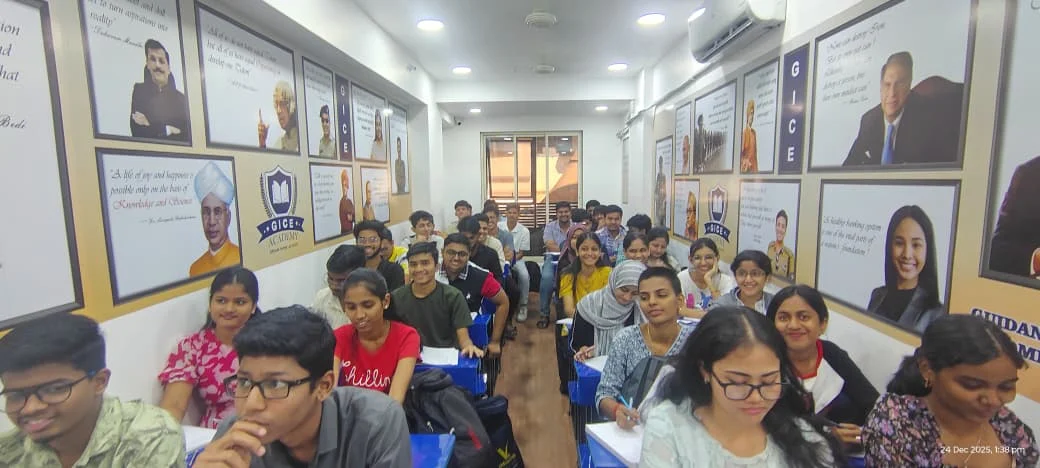
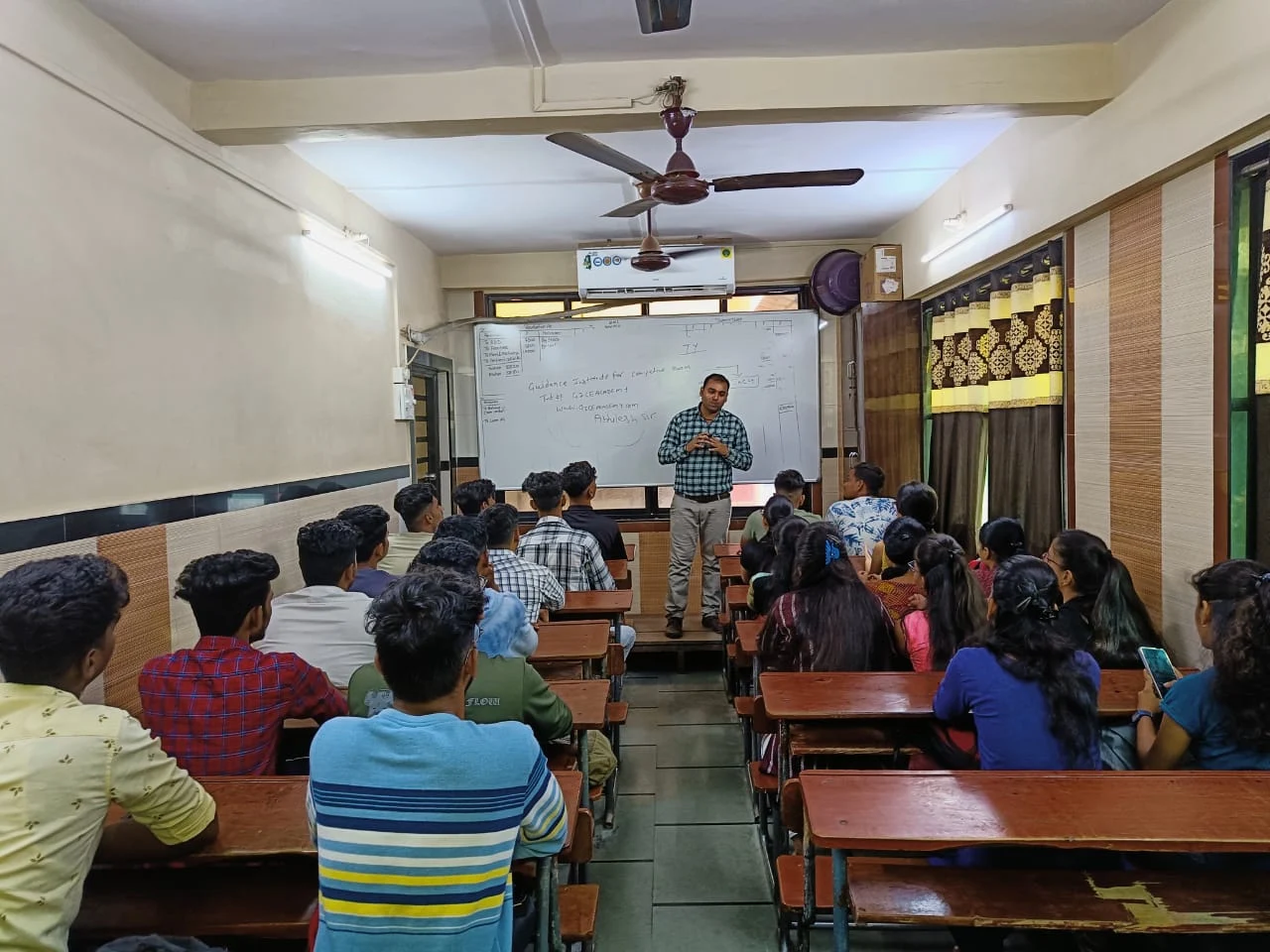
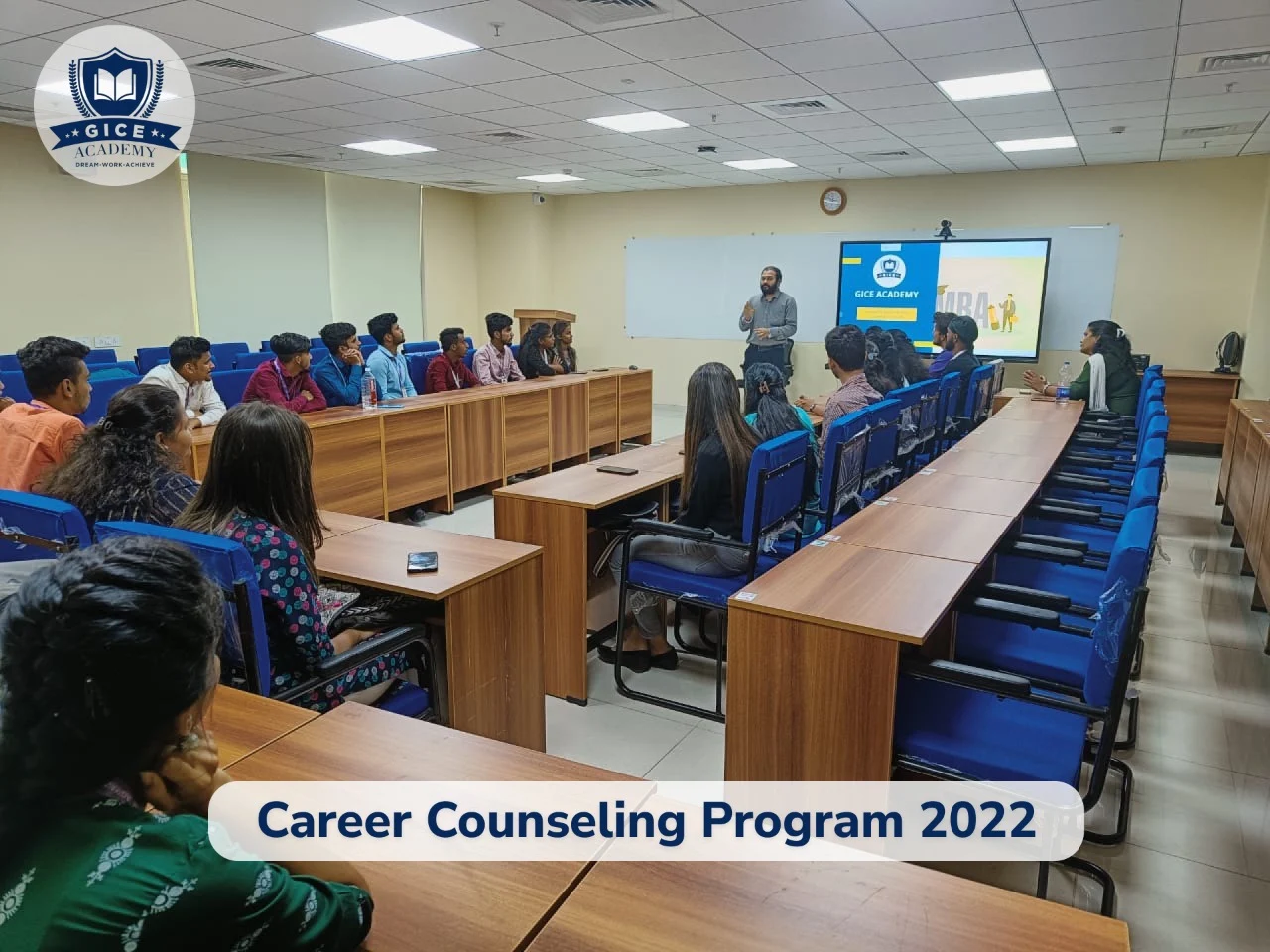
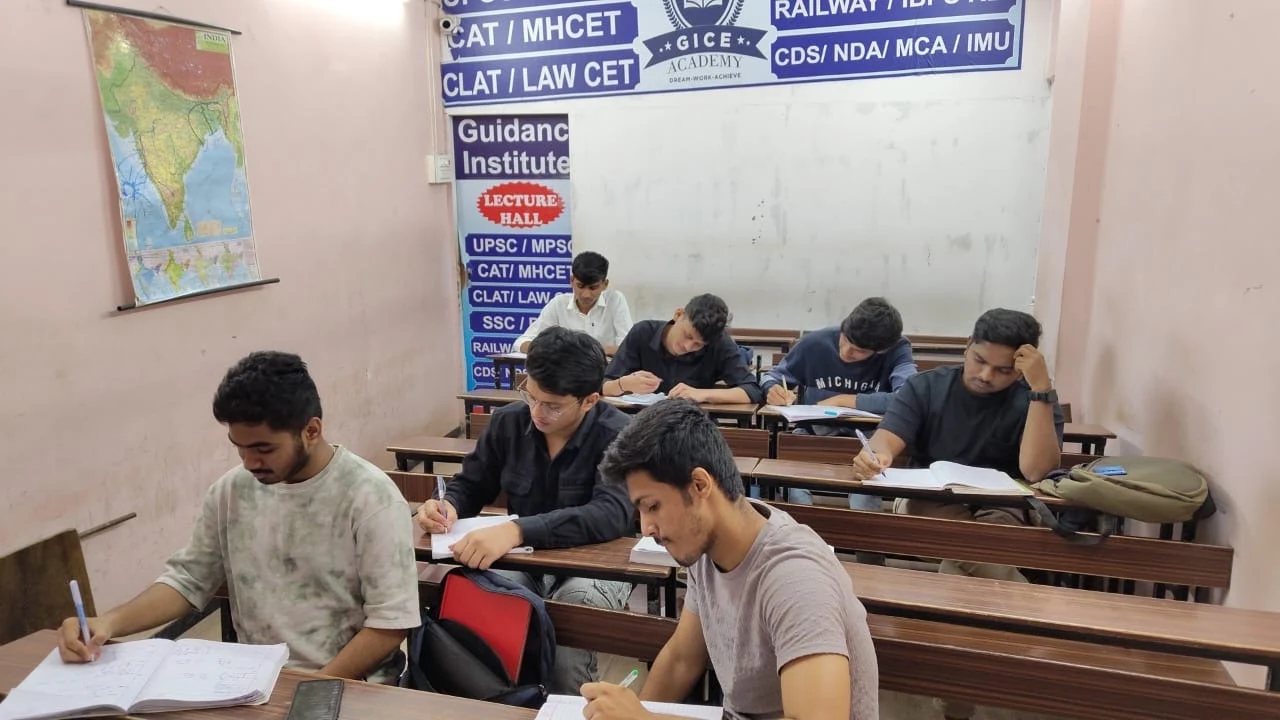
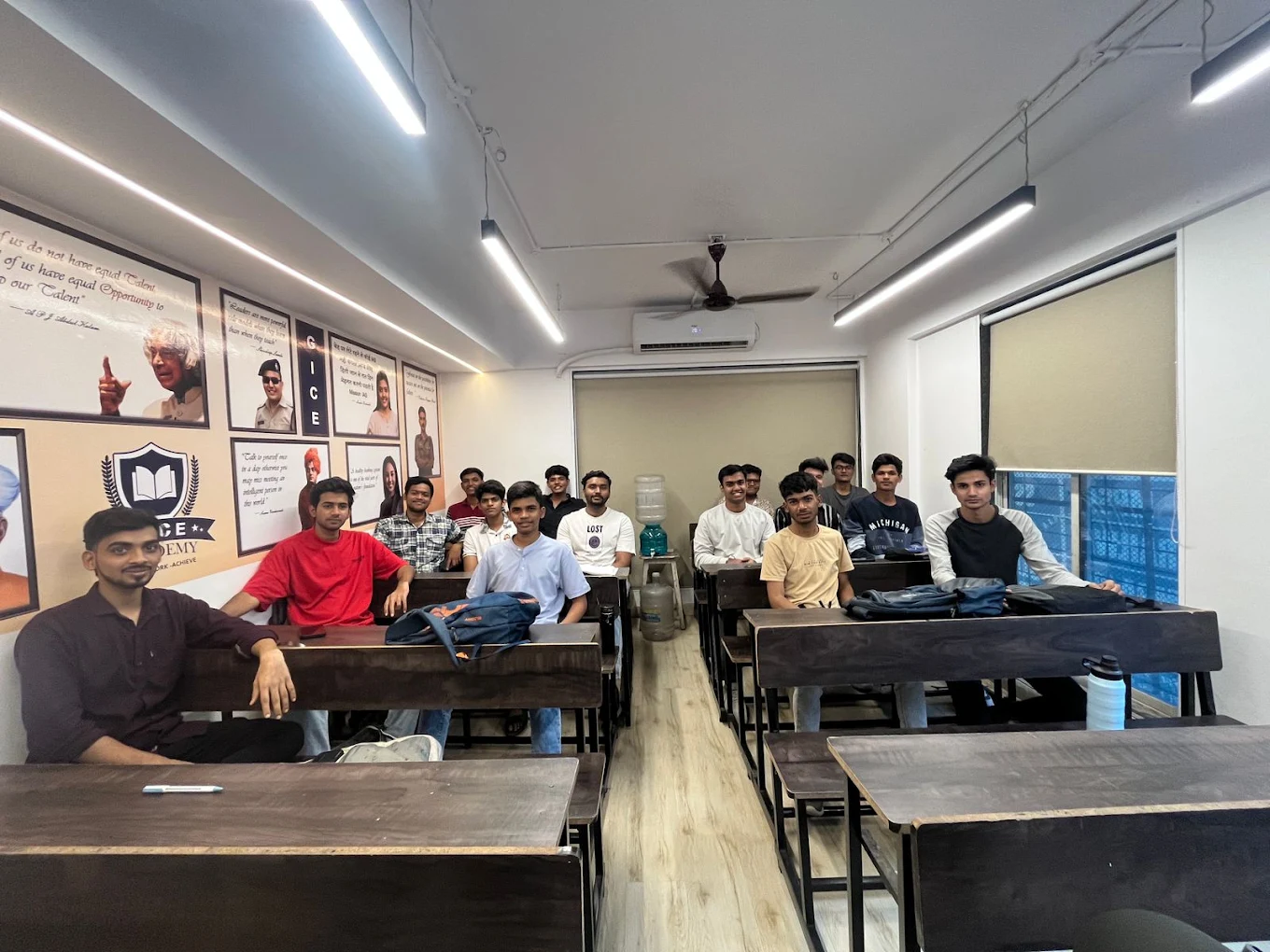
Experienced faculty, a syllabus broken into a manageable study plan, and a coaching approach adjusted to each student's starting point rather than a single fixed track for every batch.
Yes — online batches run alongside our in-person Dombivli sessions, with the same study material, mock test access, and faculty availability for doubts.
Yes. We run dedicated weekend and evening batches specifically for candidates balancing a full-time job with UPSC preparation, without compressing the syllabus.
Mock tests run at regular intervals through the programme, timed and formatted to match the actual UPSC exam as closely as possible, with detailed post-test analysis.
Yes — our programme includes a focused track for candidates who have attempted UPSC before and want a more targeted, strategy-driven round of preparation rather than starting over.
Yes — faculty guide students through choosing an optional subject based on their academic background, comfort level, and available study material, rather than a generic "popular subject" recommendation.
[Your full address here — building, street, landmark, area, city, pincode]