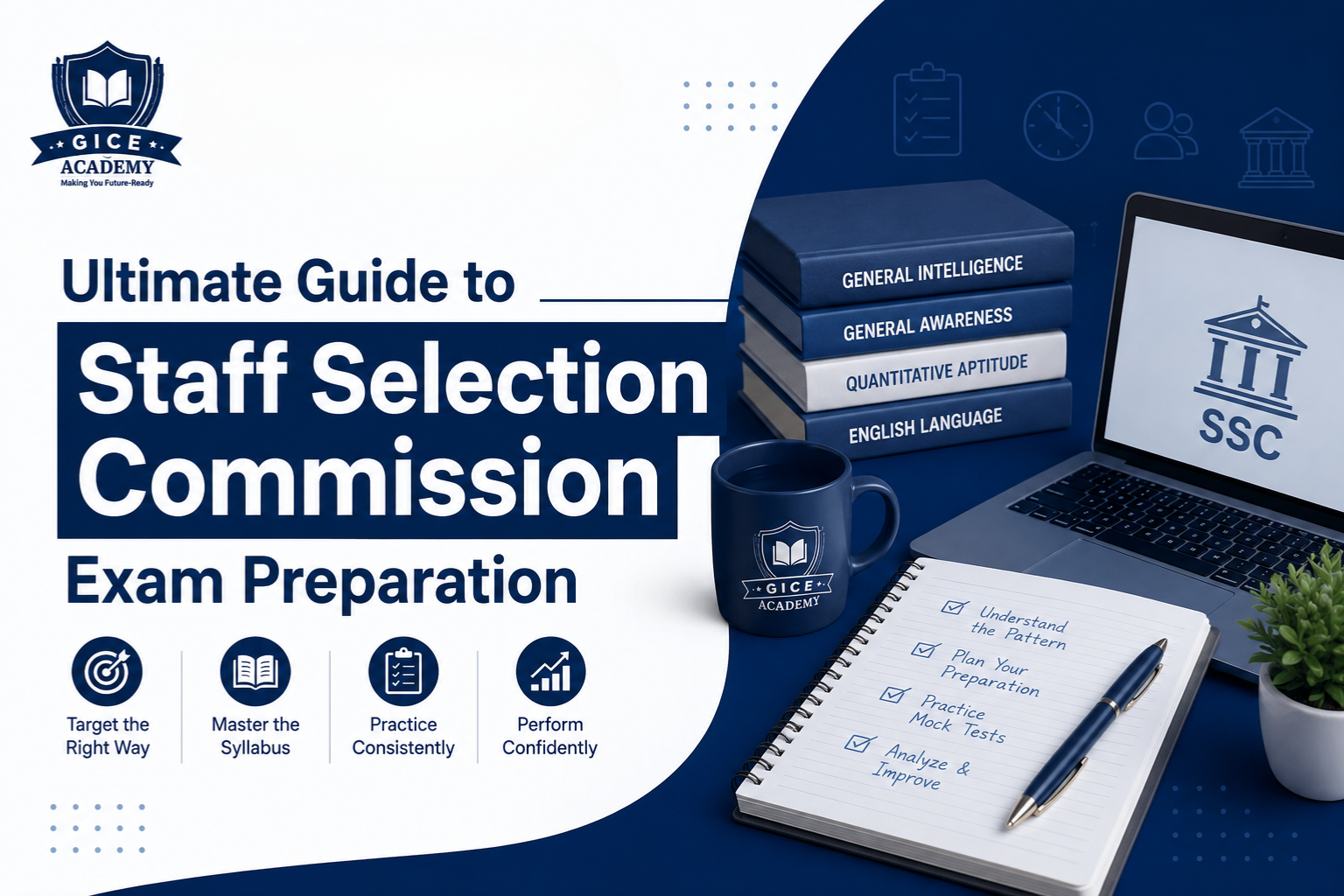

Every year, lakhs of Indian graduates dream of getting a government job. The staff selection commission exam, commonly known as SSC CGL, is one of the most popular routes to a stable and respected government career. From Group B and Group C posts in central ministries to departments like CBI, Income Tax, and Customs, this exam opens doors to a wide range of opportunities.
But let’s be honest. Cracking the SSC CGL is not easy. The competition is fierce, the syllabus is broad, and a lot of aspirants struggle to figure out where to begin. That’s exactly what this guide is for.
This guide covers everything you need to know about SSC CGL preparation, from understanding the exam structure to picking the best study resources, managing your time, and staying mentally strong throughout the process. Whether you are a first-time applicant or someone who has attempted the exam before, this guide will help you build a clear and effective strategy.
Key Takeaways
- What the SSC CGL exam structure looks like and what posts you can get
- The complete syllabus and which subjects matter most
- How to build a study plan that actually works
- The best books and online resources for SSC CGL preparation
- Tips for Tier 1, Tier 2, and the Document Verification stage
- Common mistakes aspirants make and how to avoid them
- How to stay consistent and manage exam stress
What is the SSC CGL Exam?
The Staff Selection Commission Combined Graduate Level exam (SSC CGL) is conducted by the Staff Selection Commission of India. It recruits candidates for Group B and Group C posts across various central government ministries, departments, and organisations.
The exam is held every year and attracts millions of applicants from across the country. To be eligible, you need a bachelor’s degree from a recognised university. Some posts have additional requirements like age limits or specific educational backgrounds.
Posts You Can Get Through SSC CGL
Here are some of the most sought-after posts available through this exam:
- Income Tax Inspector (CBDT)
- Assistant Section Officer (CSS, MEA, AFHQ)
- Sub-Inspector (CBI, NIA)
- Inspector of Posts (Department of Posts)
- Junior Statistical Officer (M/o Statistics)
- Auditor and Accountant (CAG, CGDA)
- Tax Assistant (CBDT, CBIC)
- Upper Division Clerk (Various Ministries)
Each post comes with different pay scales, job roles, and promotion opportunities. It is important to know which posts you are targeting before you begin your preparation.
SSC CGL Exam Structure: Know Before You Prepare
Understanding the exam structure is the first step in any good preparation plan. The staff selection commission exam currently has two tiers:
| Tier | Mode | Subjects Covered | Duration |
| Tier 1 | Computer Based Test (CBT) | General Intelligence, General Awareness, Quantitative Aptitude, English Language | 60 minutes |
| Tier 2 | Computer Based Test (CBT) | Mathematical Abilities, Reasoning, English, General Awareness, Computer Knowledge, Statistics (optional) | Multiple sessions |
Tier 1 is the qualifying stage. It tests your speed and accuracy. Tier 2 goes deeper into each subject and includes a module-based structure. Some posts also require additional papers like Statistics or Data Analysis.
There is negative marking in both tiers. Each wrong answer costs you 0.5 marks in Tier 1 and 1 mark in some Tier 2 sections. So attempt wisely.
Complete SSC CGL Syllabus Breakdown
The syllabus for the staff selection commission exam can feel overwhelming at first. But once you break it down, it becomes manageable. Here is what you need to cover:
1. General Intelligence and Reasoning
This section tests your logical thinking. Topics include:
- Analogies and Classification
- Series (Number, Letter, Figurative)
- Coding and Decoding
- Blood Relations
- Direction and Distance
- Venn Diagrams and Syllogism
- Non-verbal Reasoning (Patterns, Mirror Images)
- Matrix and Word Formation
Reasoning is one of the highest-scoring sections if practised well. Most questions follow predictable patterns.
2. General Awareness
This section covers current affairs and static GK. Key areas include:
- Indian History (Ancient, Medieval, Modern)
- Indian Polity and Constitution
- Geography (India and World)
- Economy and Budget Basics
- Science (Physics, Chemistry, Biology)
- Current Affairs (last 6 months)
- Sports, Awards, and Important Days
Tip: Read a good monthly current affairs magazine and revise static GK with short notes.
3. Quantitative Aptitude
This is often the most challenging section for many aspirants. Core topics include:
- Number System and Simplification
- Percentage, Profit and Loss
- Ratio, Proportion, and Averages
- Time, Speed, Distance
- Algebra and Geometry
- Trigonometry
- Data Interpretation (Tables, Charts, Graphs)
Do not skip Geometry and Trigonometry. They carry good weightage in Tier 2.
4. English Language and Comprehension
This section tests your grammar and reading skills. Topics include:
- Reading Comprehension
- Fill in the Blanks
- Error Spotting
- Sentence Improvement and Rearrangement
- Cloze Test
- Synonyms, Antonyms, and Idioms
How to Build a Study Plan for staff selection commission exam
A study plan is only useful if you can actually follow it. Here is a simple approach to planning your SSC CGL preparation:
Step 1: Assess Your Current Level
Before making a schedule, take a mock test to understand where you stand. Identify which sections are your strengths and which need more work.
Step 2: Set a Timeline
If you have 4 to 6 months, that is a good window for focused preparation. Divide your time like this:
| Phase | Duration | Focus |
| Foundation | Month 1-2 | Cover the entire syllabus, build concepts from scratch |
| Practice | Month 3-4 | Solve previous year papers, topic-wise tests |
| Revision | Month 5 | Revise notes, work on weak areas |
| Mock Tests | Month 6 | Full-length mocks every day, analyse performance |
Step 3: Set Daily Targets
Aim for 6 to 8 hours of study daily. Break it into two or three sessions. Here is a sample daily routine:
- Morning (2 hours): Quantitative Aptitude practice
- Afternoon (2 hours): English reading and grammar
- Evening (2 hours): Reasoning and Current Affairs
- Night (30 min): Quick revision of the day’s topics
Step 4: Track Your Progress
Maintain a notebook where you write down mistakes from mock tests. Review it weekly. This simple habit can significantly improve your score over time.
Best Books for SSC CGL Preparation
Choosing the right study material is crucial. Here are the most trusted books used by SSC toppers across India:
| Subject | Recommended Book | Author / Publisher |
| Quantitative Aptitude | Quantitative Aptitude for Competitive Exams | R.S. Aggarwal |
| Quantitative Aptitude | Fast Track Objective Arithmetic | Rajesh Verma |
| Reasoning | A Modern Approach to Verbal and Non-Verbal Reasoning | R.S. Aggarwal |
| English | Objective General English | S.P. Bakshi |
| English | Word Power Made Easy | Norman Lewis |
| General Awareness | Lucent’s General Knowledge | Lucent Publications |
| Previous Year Papers | SSC CGL Chapter-wise Solved Papers | Kiran Prakashan |
Along with books, practice from previous year question papers is a must. At least the last 5 to 10 years of papers should be solved during your preparation.
Online Resources and Apps for SSC CGL
Digital tools have made staff selection commission exam preparation much more accessible, especially for students in smaller cities and towns. Here are some platforms worth using:
Free and Paid Platforms
- Testbook: Excellent for mock tests and live quizzes
- Unacademy: Structured video courses for all sections
- Adda247: Great for live classes and SSC-specific content
- YouTube Channels: SSC Adda, Mahendra Guru, Wifistudy (free and very helpful)
- BYJU’s Exam Prep: Good for topic-wise practice
Tip: Do not subscribe to multiple platforms. Pick one or two and use them consistently.
Tier 1 Preparation Strategy
Tier 1 is the gateway to the entire SSC CGL selection process. It tests your speed, accuracy, and ability to manage time under pressure.
Here is how to approach each section:
- General Intelligence and Reasoning: Practise daily for 30 minutes. Focus on pattern recognition. Speed matters here.
- General Awareness: Read current affairs daily. Revise static GK in short notes. Do not try to mug up everything.
- Quantitative Aptitude: Work on speed. Learn shortcuts and tricks for calculation-heavy topics.
- English Language: Read English newspapers daily. Focus on grammar rules and vocabulary.
In Tier 1, time management is the key. You have 60 minutes for 100 questions. That is roughly 36 seconds per question. Attempt your strongest section first.
Tier 2 Preparation Strategy
Tier 2 is more detailed and marks-intensive. The difficulty level is higher, and you need stronger conceptual clarity.
Mathematics and Statistics
Geometry, Trigonometry, and Data Interpretation are the key areas. Practise at least 20 to 25 questions from these topics daily. Avoid guessing in Tier 2 as negative marking is steeper.
English Language and Comprehension
Reading Comprehension passages in Tier 2 are longer and trickier. Practise reading speed and inference-based questions regularly.
General Awareness
This is the same GK and current affairs section but at a higher level. Focus on Economy, Polity, and Science more deeply for Tier 2.
Computer Knowledge
This is a qualifying paper in some posts. It covers basics of MS Office, Internet, and Computer Fundamentals. A couple of weeks of focused study is enough to clear it.
Mock Tests: The Most Underrated Preparation Tool
Many aspirants spend months studying from books but never sit for a proper mock test until the last moment. This is a big mistake.
Mock tests do several things for you:
- They show you where you actually stand
- They improve your time management under exam conditions
- They help you identify patterns in question types
- They reduce exam-day anxiety
Start taking full-length mocks at least 2 months before the exam. After each mock, spend time analysing it. Do not just look at your score. Look at which questions you got wrong and why.
Aim for at least 50 to 60 full-length mock tests before Tier 1 and another 30 to 40 before Tier 2.
Common Mistakes to Avoid
Even hardworking aspirants can fall into traps that slow down their progress. Here are the most common mistakes in SSC CGL preparation:
- Ignoring the syllabus: Studying topics that are not in the syllabus wastes time and energy.
- Not solving previous year papers: Old papers reveal actual exam patterns, difficulty levels, and repeated topics.
- Studying without a plan: Random studying without targets leads to inconsistent results.
- Skipping mock tests: Without regular testing, you do not know your real preparation level.
- Neglecting General Awareness: Many aspirants focus only on Maths and ignore GK, which is a quick and easy scoring section.
- Over-relying on one book: Different books cover different aspects. Variety helps.
- Burning out: Studying 12 to 14 hours a day without breaks leads to fatigue. Balance is important.
How to Handle Exam Stress and Stay Consistent
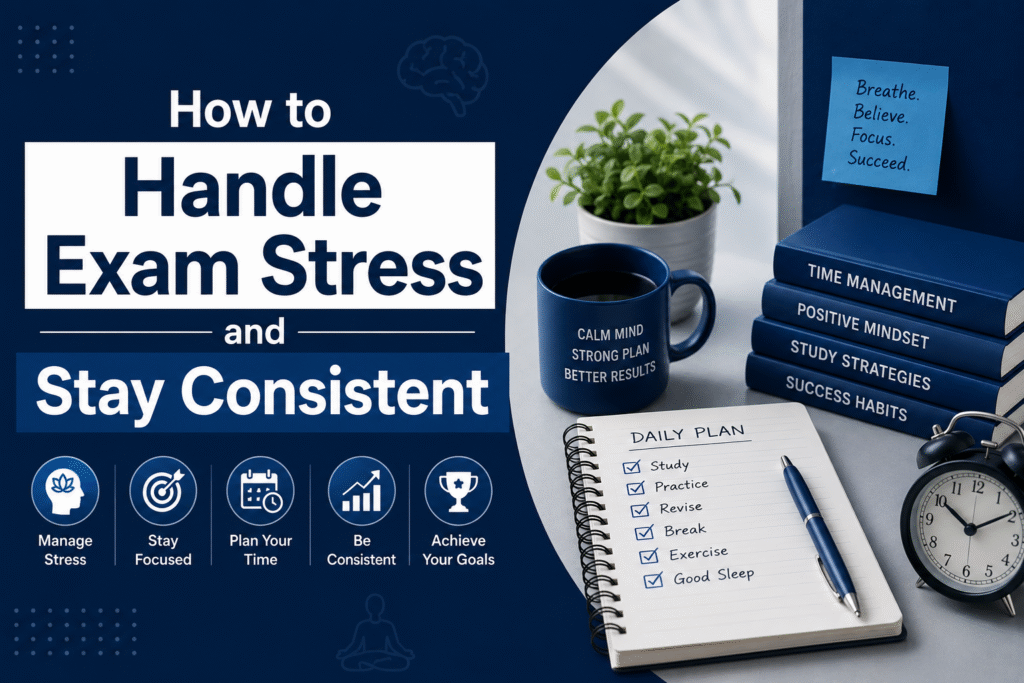
SSC CGL preparation is a long journey. Many aspirants start strong but lose motivation halfway through. Here is how to stay on track:
- Set small, weekly goals instead of only thinking about the final exam
- Celebrate small wins, like finishing a chapter or scoring above your previous mock test score
- Take regular breaks, a short walk, some music, or 10 minutes of stretching can reset your focus
- Connect with other aspirants through study groups or online communities for accountability
- Sleep 7 to 8 hours daily, your brain needs rest to retain what you study
- Avoid comparing yourself with others constantly. Everyone has a different starting point
Mental fitness is just as important as preparation quality. Do not ignore it.
SSC CGL Eligibility Criteria at a Glance
| Criterion | Details |
| Educational Qualification | Bachelor’s Degree from a recognised university |
| Age Limit (General) | 18 to 32 years (varies by post) |
| Age Relaxation (SC/ST) | 5 years |
| Age Relaxation (OBC) | 3 years |
| Age Relaxation (PwD) | 10 years (General), 13 years (OBC), 15 years (SC/ST) |
| Nationality | Indian Citizen (some posts allow Nepal/Bhutan nationals) |
Always check the official SSC notification for the most current eligibility details before applying.
Conclusion
The staff selection commission exam is tough, but it is absolutely crackable with the right strategy, consistent effort, and smart preparation. Thousands of candidates from ordinary backgrounds clear it every year and build fulfilling careers in the government sector.
Start with a clear understanding of the exam structure and syllabus. Build a realistic study plan. Pick quality resources over quantity. Practise mock tests relentlessly. And most importantly, keep going even when it gets hard.
The effort you put in today directly shapes the career you will have tomorrow. Start now with GICE Academy, stay consistent, and give your SSC CGL preparation everything you have got.